Nasi Kerabu
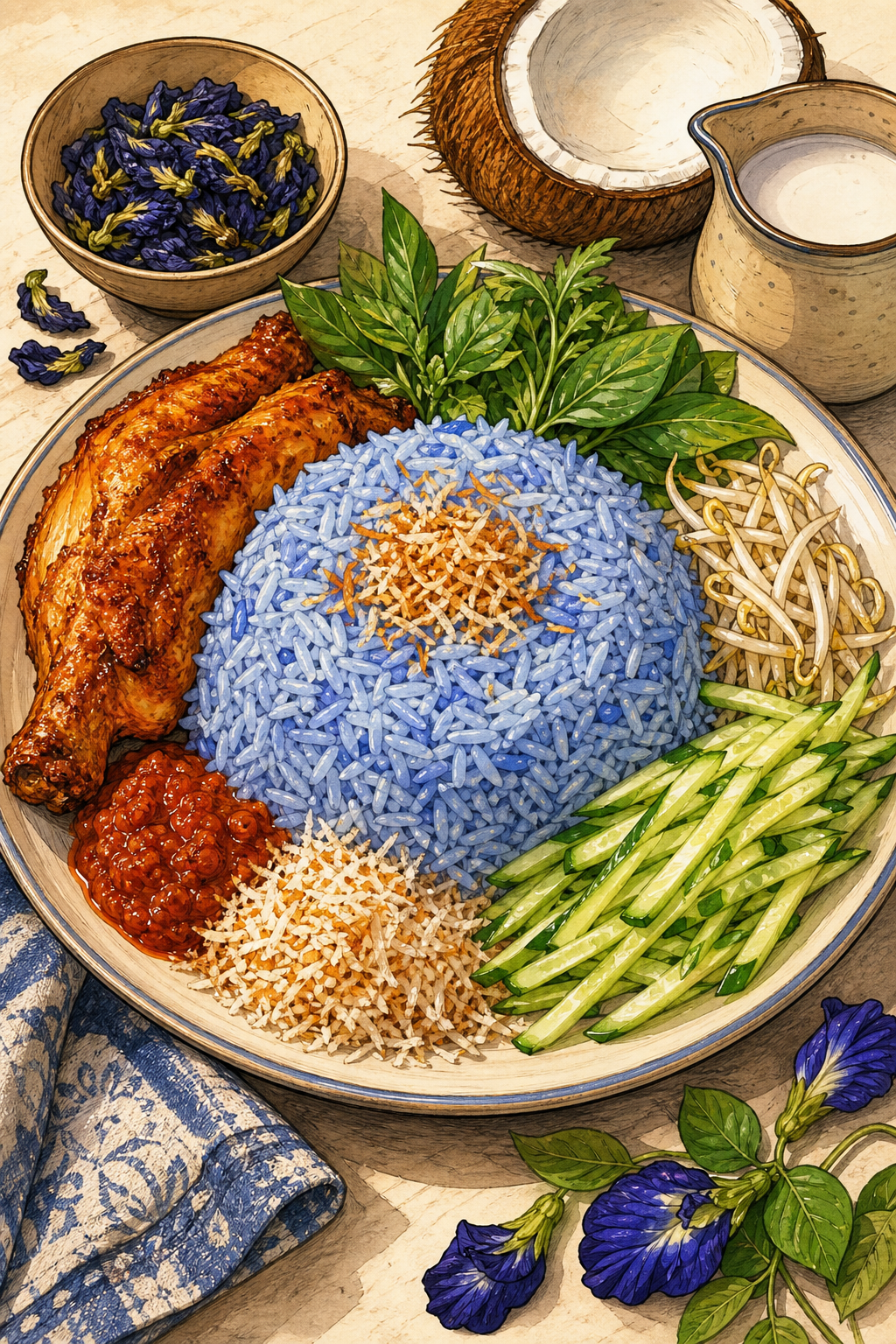
Kelantan-style Nasi Kerabu pairs naturally blue butterfly-pea rice with a finely shredded herb salad, toasted coconut, budu dressing, sambal, and savory accompaniments.
Plan and shop
Save this recipe for real-life cooking
Build a local shopping list or place this recipe into a weekly meal plan. No account is required.
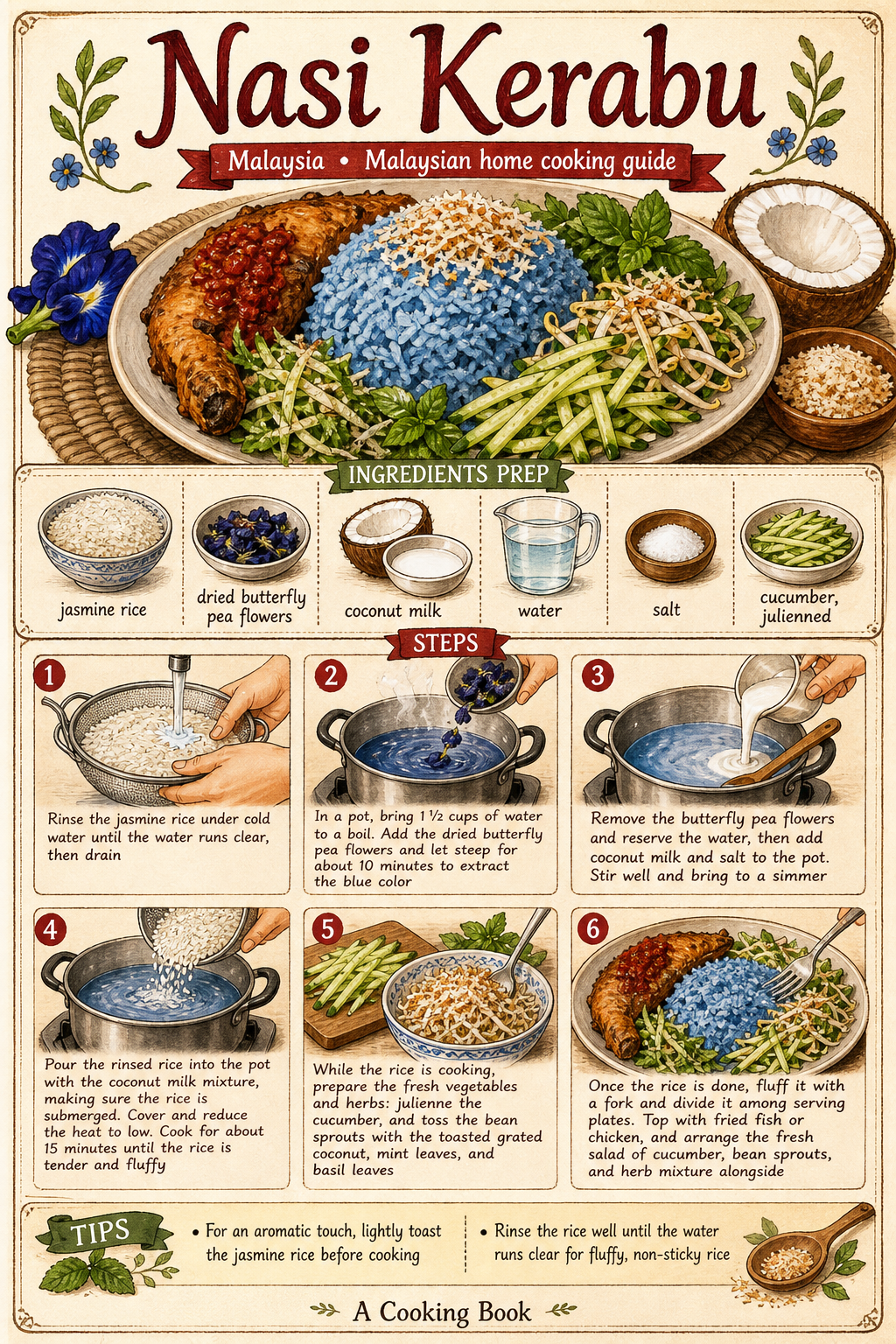
Illustrated cooking guide
Step-by-step visual method
A polished English infographic for the whole cooking flow, paired with the full written recipe below for detail and SEO.
Written method
Instructions
Read through once, then cook at your own pace with the illustrated guide above.
- 1
Cook the rice with the blue butterfly-pea infusion, pandan, and salt until tender; rest covered for 10 minutes, then fluff.
- 2
Combine budu, lime juice, and palm sugar for a salty-sour dressing.
- 3
Toss the finely shredded ulam with the toasted coconut just before serving.
- 4
Mound the blue rice on plates and arrange the ulam, fish, salted egg, and sambal around it.
- 5
Spoon over a little budu dressing and serve the remaining dressing separately.
Cook notes
Tips
Slice the ulam very finely and keep it dry so it stays crisp beside the rice.
Prepare defining aromatics and garnishes before cooking so the final dish keeps its intended balance.
Cook smarter
Helpful notes
Practical storage, serving, swap, and troubleshooting notes for a better first try.
Storage Tips
- Cool cooked food promptly before refrigerating.
- Store wet, crisp, and fresh components separately when possible.
- Reheat gently and add fresh garnishes only when serving.
Substitutions
- Use the closest Southeast Asian equivalent only when a defining Malaysian ingredient is unavailable.
- Do not replace the defining spice paste, fermented seasoning, herb, or cooking method with a generic seasoning blend.
What to Serve With
- Steamed rice, sambal, cucumber, or lime where traditional for the dish.
- A complementary Malaysian curry, vegetable dish, snack, or drink.
Common Mistakes
- Omitting the defining Malaysian aromatics, fermented seasoning, herb mixture, or garnish.
- Rushing reduction, resting, steaming, grilling, or broth-building steps that create the traditional texture.
Recipe FAQ
What defines Nasi Kerabu?
Kelantan-style Nasi Kerabu pairs naturally blue butterfly-pea rice with a finely shredded herb salad, toasted coconut, budu dressing, sambal, and savory accompaniments.
Can Nasi Kerabu be prepared ahead?
Prepare the components ahead where noted, but complete frying, grilling, fresh-herb assembly, or drink pulling close to serving for the best texture.
How should leftover Nasi Kerabu be stored?
Cool cooked components promptly and refrigerate in airtight containers for up to 3 days; keep fresh garnishes and sauces separate.
Kitchen tools
Helpful Tools for This Recipe
A light, editable placeholder for future partner recommendations. No real affiliate links are enabled yet.
Rice cooker
Good for steady rice, grains, and meal-prep bowls.
Blender
Helpful for smooth sauces, soups, marinades, and purees.
Skillet
Useful for browning, quick sautes, and weeknight one-pan cooking.
Chef knife
A basic prep tool for vegetables, herbs, aromatics, and proteins.
Cutting board
Keeps prep organized for chopping, slicing, and staging ingredients.
Some links may be affiliate links. As an Amazon Associate or partner, we may earn from qualifying purchases when enabled. Read the Affiliate Disclosure.
Cook along weekly
Want more illustrated recipes like Nasi Kerabu?
Join the World Recipe Letter for global home-cooking ideas and visual recipe guides.
Join the World Recipe Letter
Get 5 illustrated recipes every week.
No account needed. Unsubscribe when email delivery is connected.
Cook next
You might also like
More flavors from the same country or nearby pantry style.
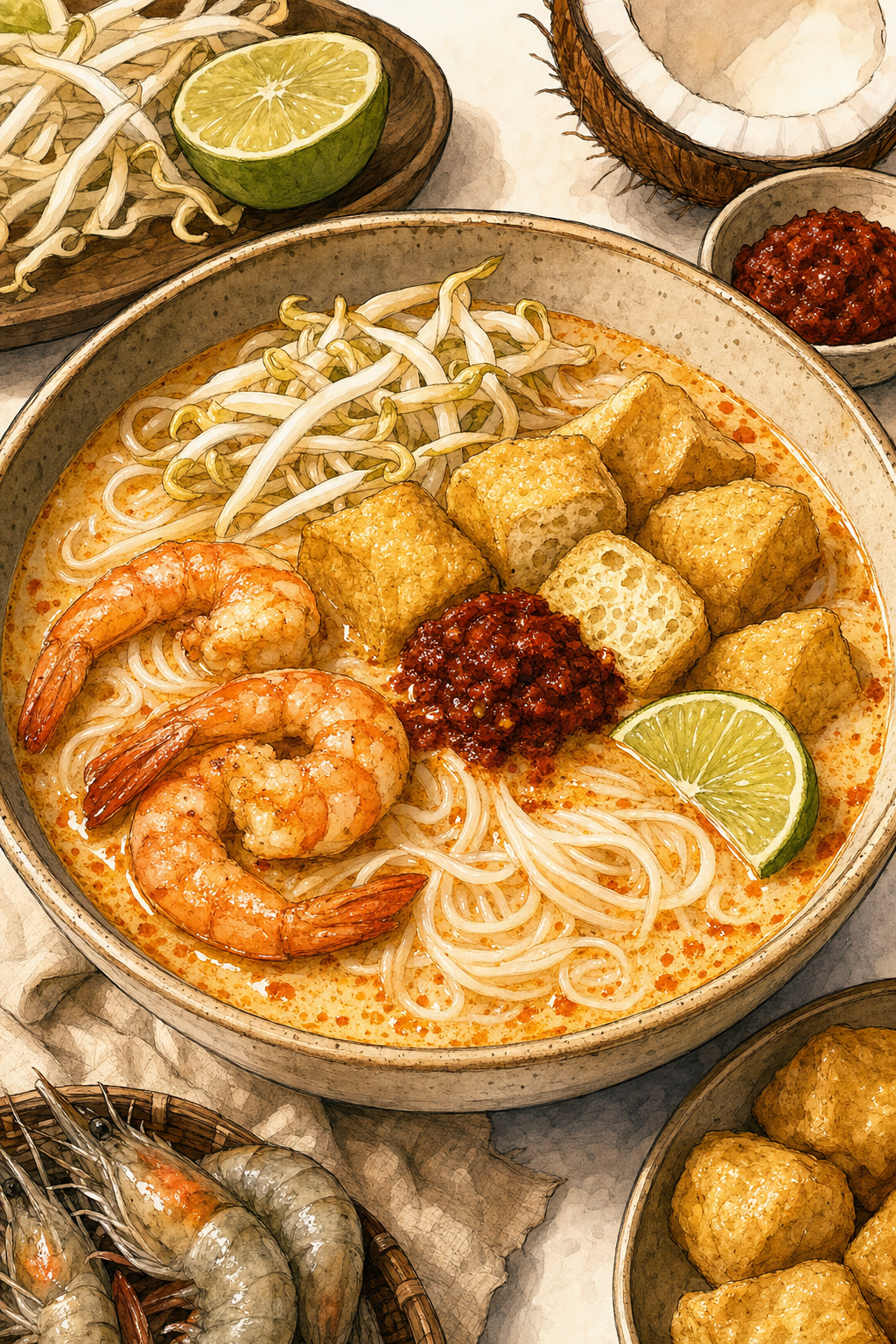
Laksa Lemak
A creamy Malaysian noodle soup with coconut broth, rice noodles, shrimp, tofu puffs, herbs, and sambal.
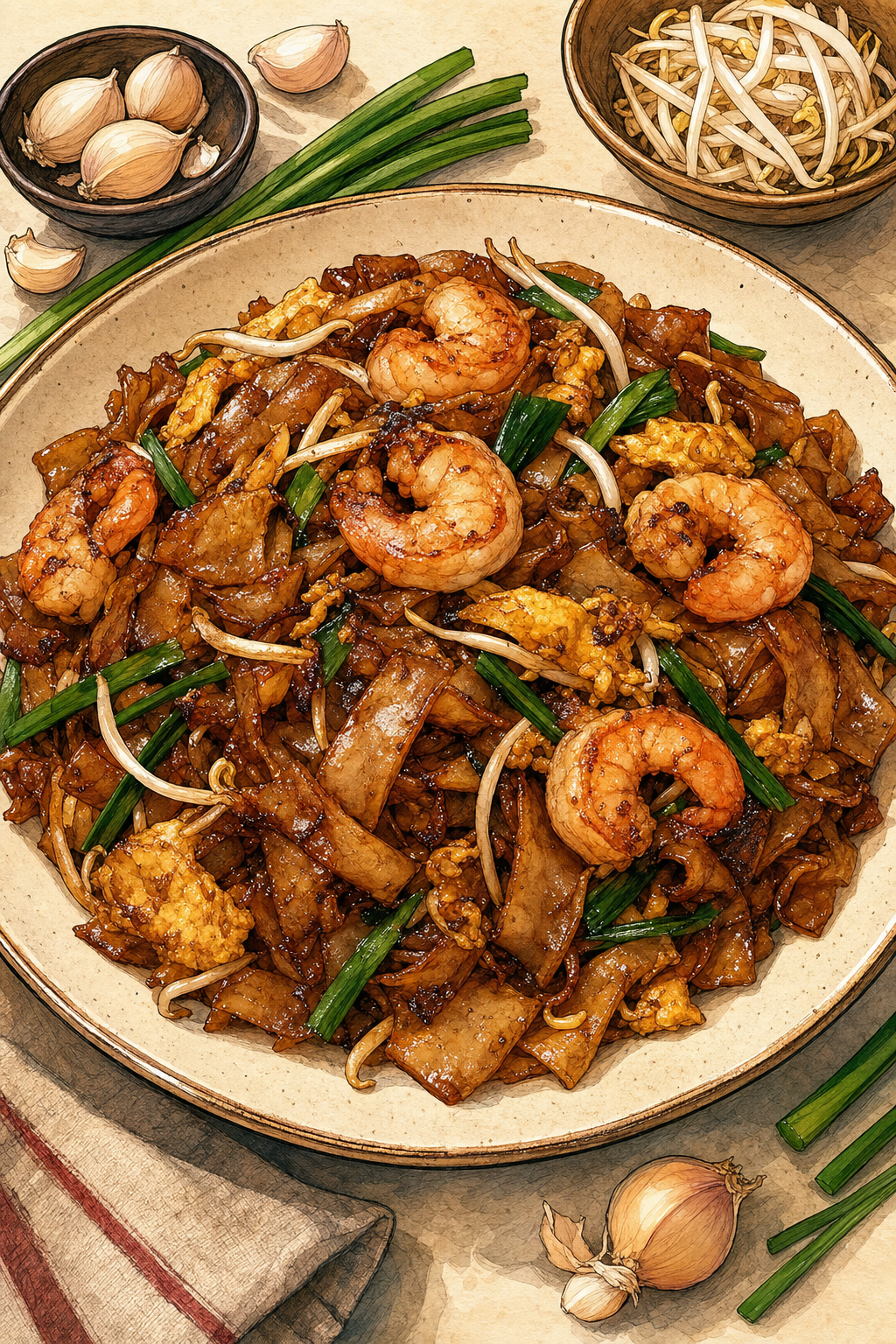
Char Kway Teow
Wide rice noodles stir-fried with shrimp, egg, bean sprouts, chives, and a dark soy sauce glaze.
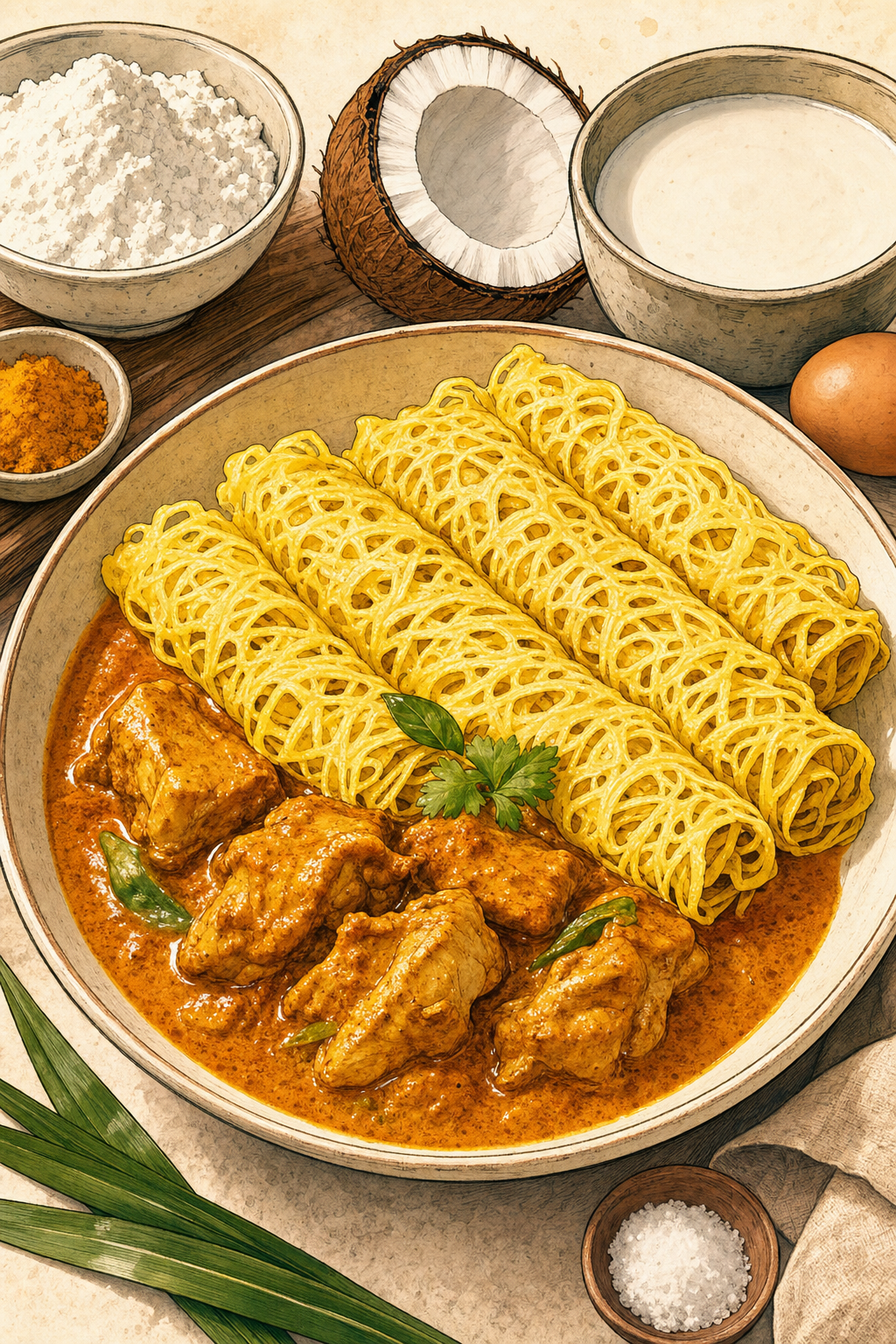
Roti Jala with Curry
Roti Jala, also known as net bread, is a traditional Malaysian dish that features delicate, lace-like crepes served with flavorful curry. This easy-to-follow recipe will guide you through creating a delightful pairing of these two popular dishes.