Sangkaya (Coconut Custard)
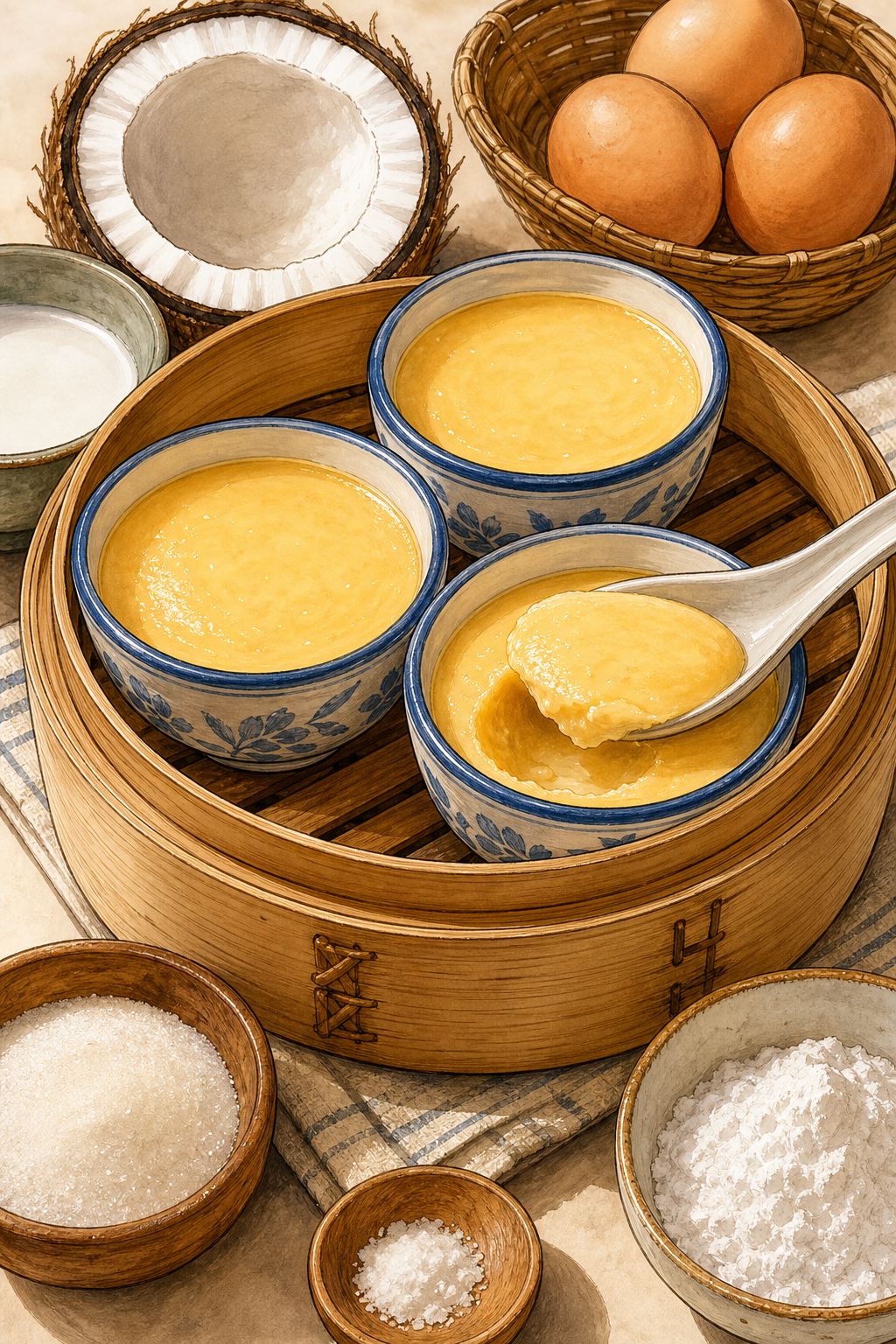
Sangkaya, a delightful Thai coconut custard, is a creamy and sweet dessert that showcases the rich flavors of coconut and eggs. It is traditionally steamed in small cups, creating a smooth and velvety texture that melts in your mouth.
Plan and shop
Save this recipe for real-life cooking
Build a local shopping list or place this recipe into a weekly meal plan. No account is required.
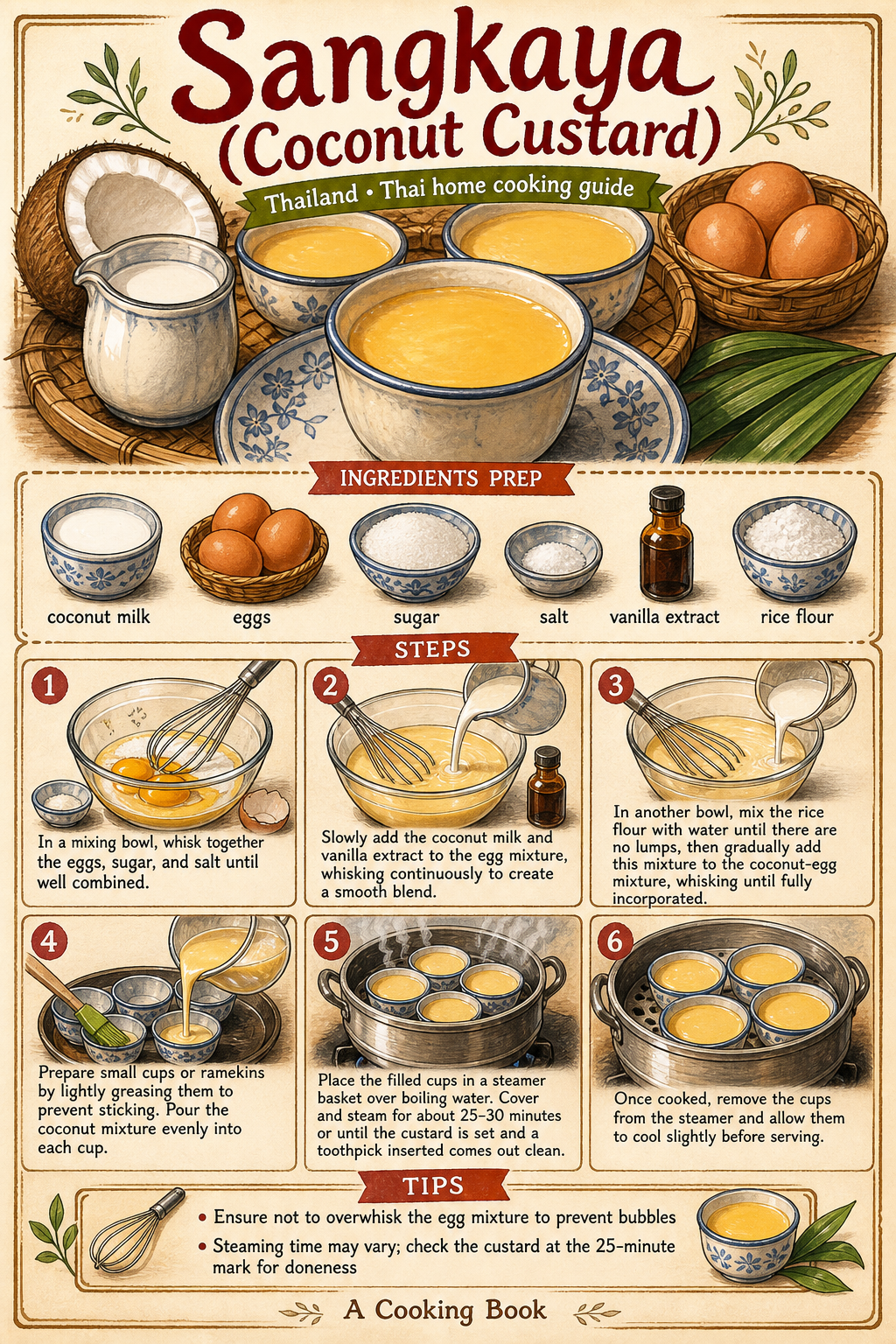
Illustrated cooking guide
Step-by-step visual method
A polished English infographic for the whole cooking flow, paired with the full written recipe below for detail and SEO.
Written method
Instructions
Read through once, then cook at your own pace with the illustrated guide above.
- 1
In a mixing bowl, whisk together the eggs, sugar, and salt until well combined.
- 2
Slowly add the coconut milk and vanilla extract to the egg mixture, whisking continuously to create a smooth blend.
- 3
In another bowl, mix the rice flour with water until there are no lumps, then gradually add this mixture to the coconut-egg mixture, whisking until fully incorporated.
- 4
Prepare small cups or ramekins by lightly greasing them to prevent sticking. Pour the coconut mixture evenly into each cup.
- 5
Place the filled cups in a steamer basket over boiling water. Cover and steam for about 25-30 minutes or until the custard is set and a toothpick inserted comes out clean.
- 6
Once cooked, remove the cups from the steamer and allow them to cool slightly before serving.
Cook notes
Tips
Ensure not to overwhisk the egg mixture to prevent bubbles.
Steaming time may vary; check the custard at the 25-minute mark for doneness.
Cook smarter
Helpful notes
Practical storage, serving, swap, and troubleshooting notes for a better first try.
Storage Tips
- Keep Sangkaya in the fridge to maintain its freshness.
- It can be frozen for up to a month; thaw in the refrigerator before serving.
Substitutions
- Use cornstarch instead of rice flour for a different texture.
- Replace coconut milk with almond milk for a dairy-free option.
What to Serve With
- Serve with fresh fruit like mango or sticky rice.
- Pair with Thai iced tea for a refreshing contrast.
Common Mistakes
- Not whisking the egg mixture enough, leading to a grainy texture.
- Oversteaming the custard can cause it to become rubbery.
Recipe FAQ
Can I use sweetened coconut milk instead of unsweetened?
Yes, you can use sweetened coconut milk, but reduce the amount of sugar to adjust for the sweetness.
How do I store leftover Sangkaya?
Store in an airtight container in the refrigerator for up to 3 days.
Can I make Sangkaya without rice flour?
You can substitute rice flour with cornstarch, but the texture may differ slightly.
Kitchen tools
Helpful Tools for This Recipe
A light, editable placeholder for future partner recommendations. No real affiliate links are enabled yet.
Rice cooker
Good for steady rice, grains, and meal-prep bowls.
Blender
Helpful for smooth sauces, soups, marinades, and purees.
Skillet
Useful for browning, quick sautes, and weeknight one-pan cooking.
Chef knife
A basic prep tool for vegetables, herbs, aromatics, and proteins.
Cutting board
Keeps prep organized for chopping, slicing, and staging ingredients.
Some links may be affiliate links. As an Amazon Associate or partner, we may earn from qualifying purchases when enabled. Read the Affiliate Disclosure.
Cook along weekly
Want more illustrated recipes like Sangkaya (Coconut Custard)?
Join the World Recipe Letter for global home-cooking ideas and visual recipe guides.
Join the World Recipe Letter
Get 5 illustrated recipes every week.
No account needed. Unsubscribe when email delivery is connected.
Cook next
You might also like
More flavors from the same country or nearby pantry style.
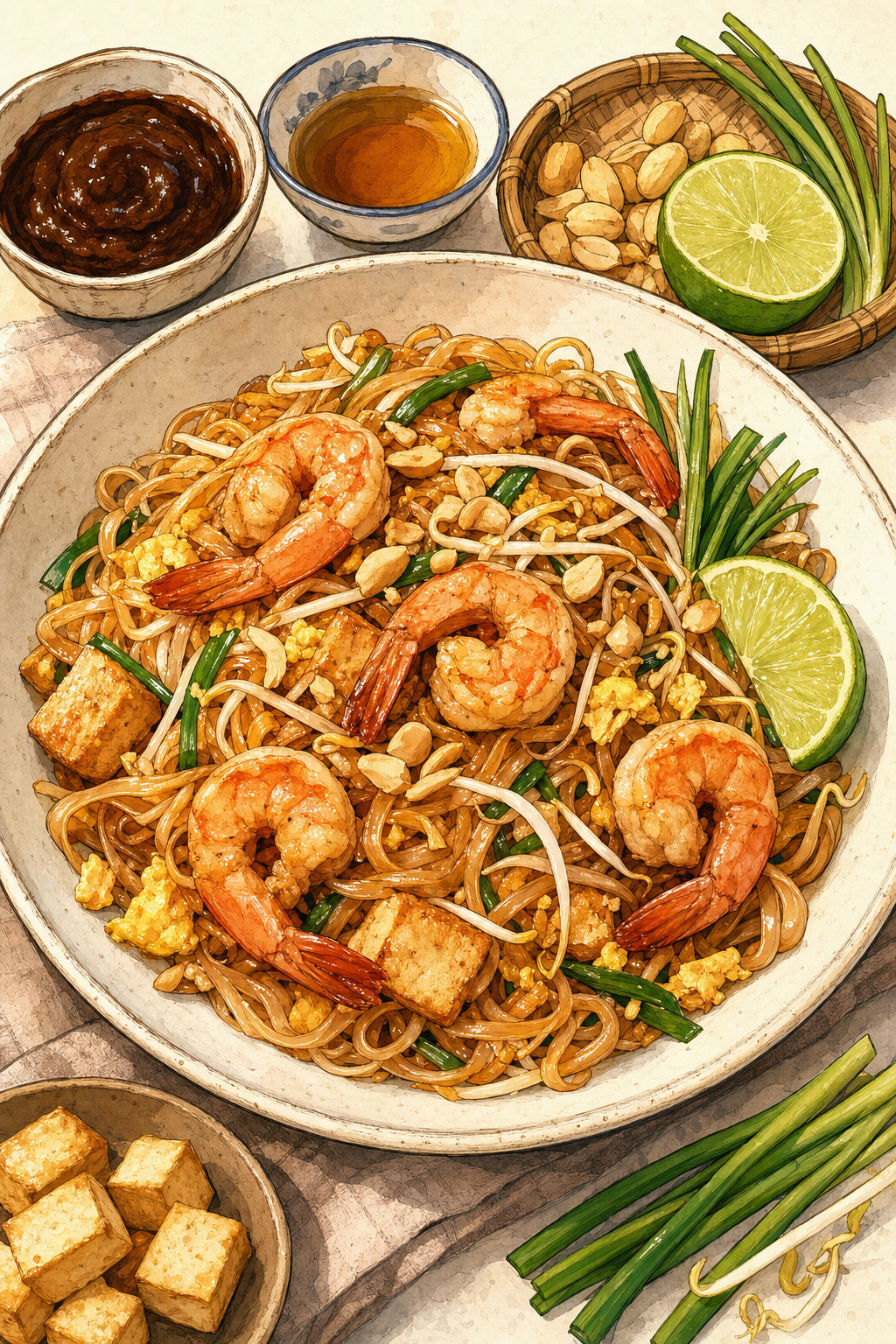
Pad Thai
Rice noodles tossed with tamarind sauce, shrimp, egg, tofu, peanuts, and lime.
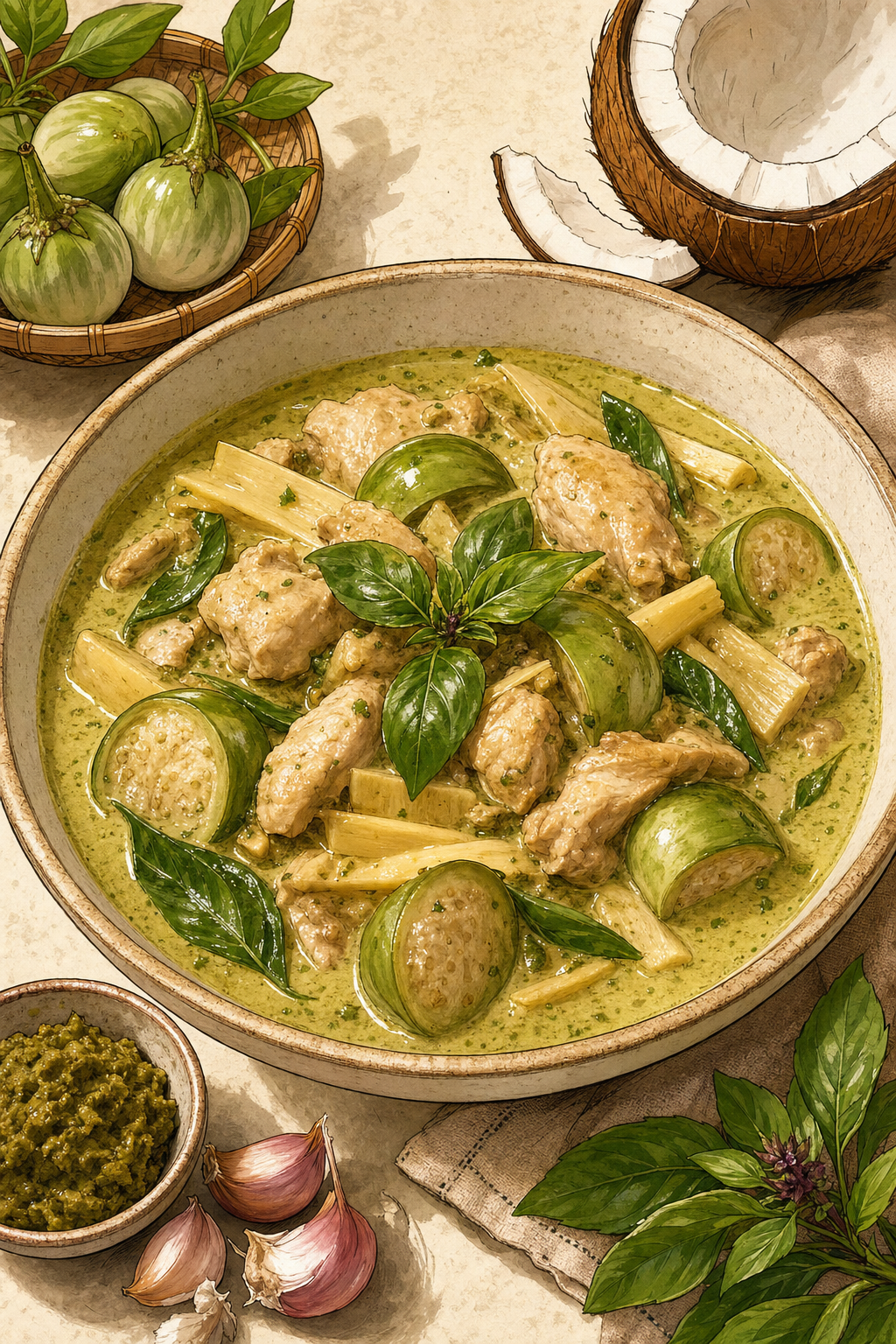
Thai Green Curry
A coconut green curry with chicken, eggplant, bamboo shoots, basil, and fragrant paste.
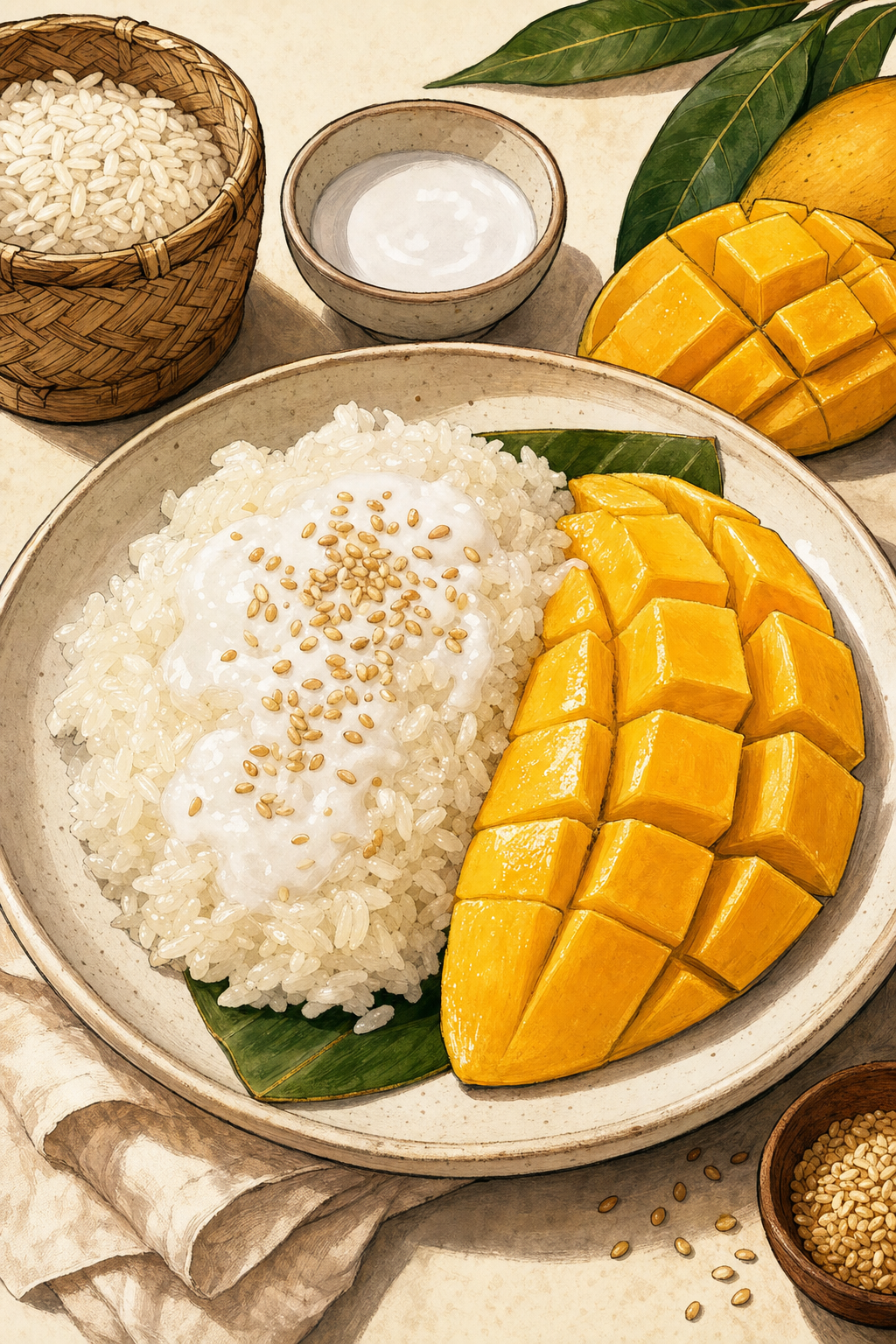
Mango Sticky Rice
Sweet coconut sticky rice served with ripe mango and toasted sesame.