Bibim Guksu (Korean Spicy Cold Noodles)
A refreshing and spicy dish, Spicy Cold Noodles is a staple in Korean cuisine, perfect for hot summer days or a light meal.
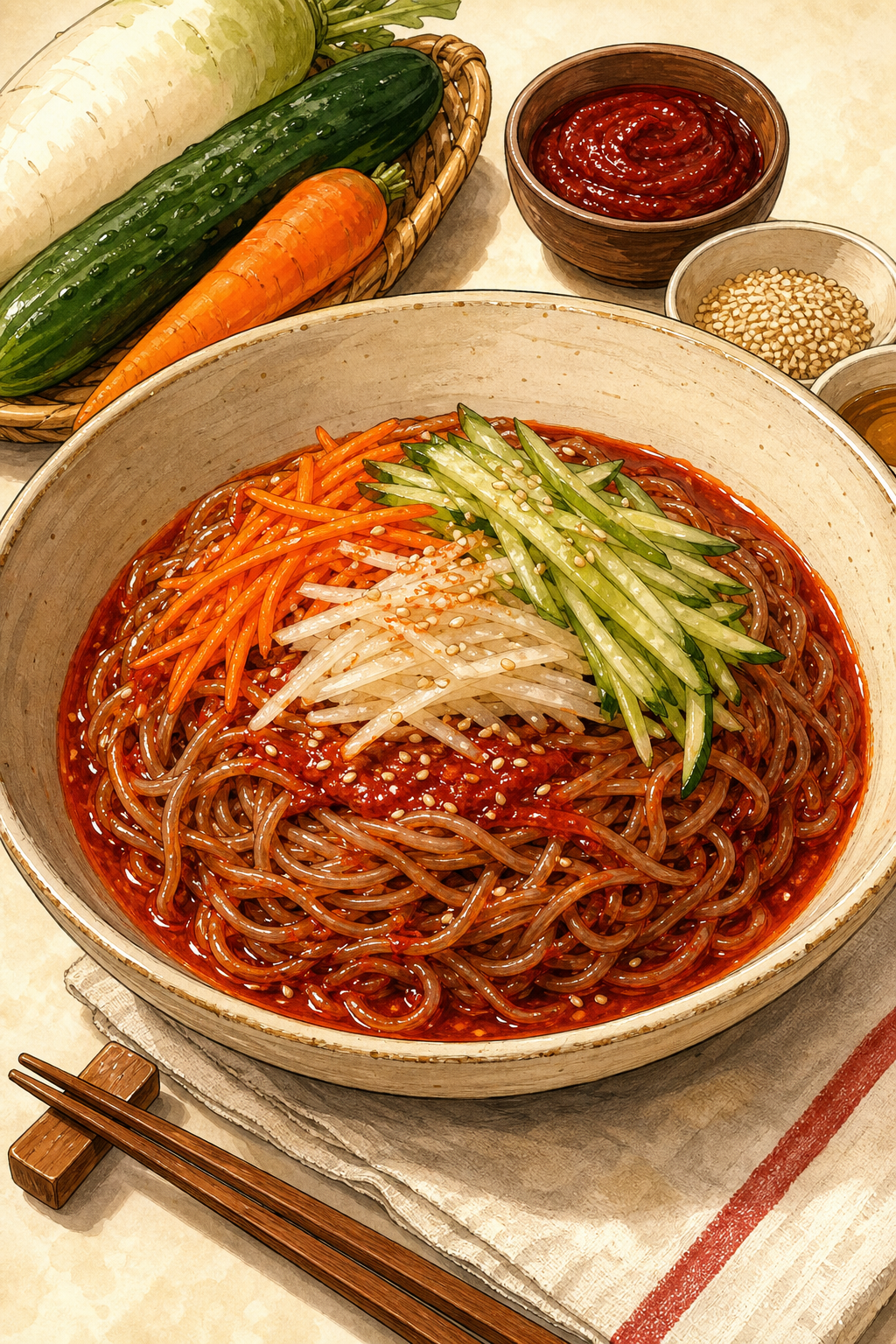
Plan and shop
Save this recipe for real-life cooking
Build a local shopping list or place this recipe into a weekly meal plan. No account is required.
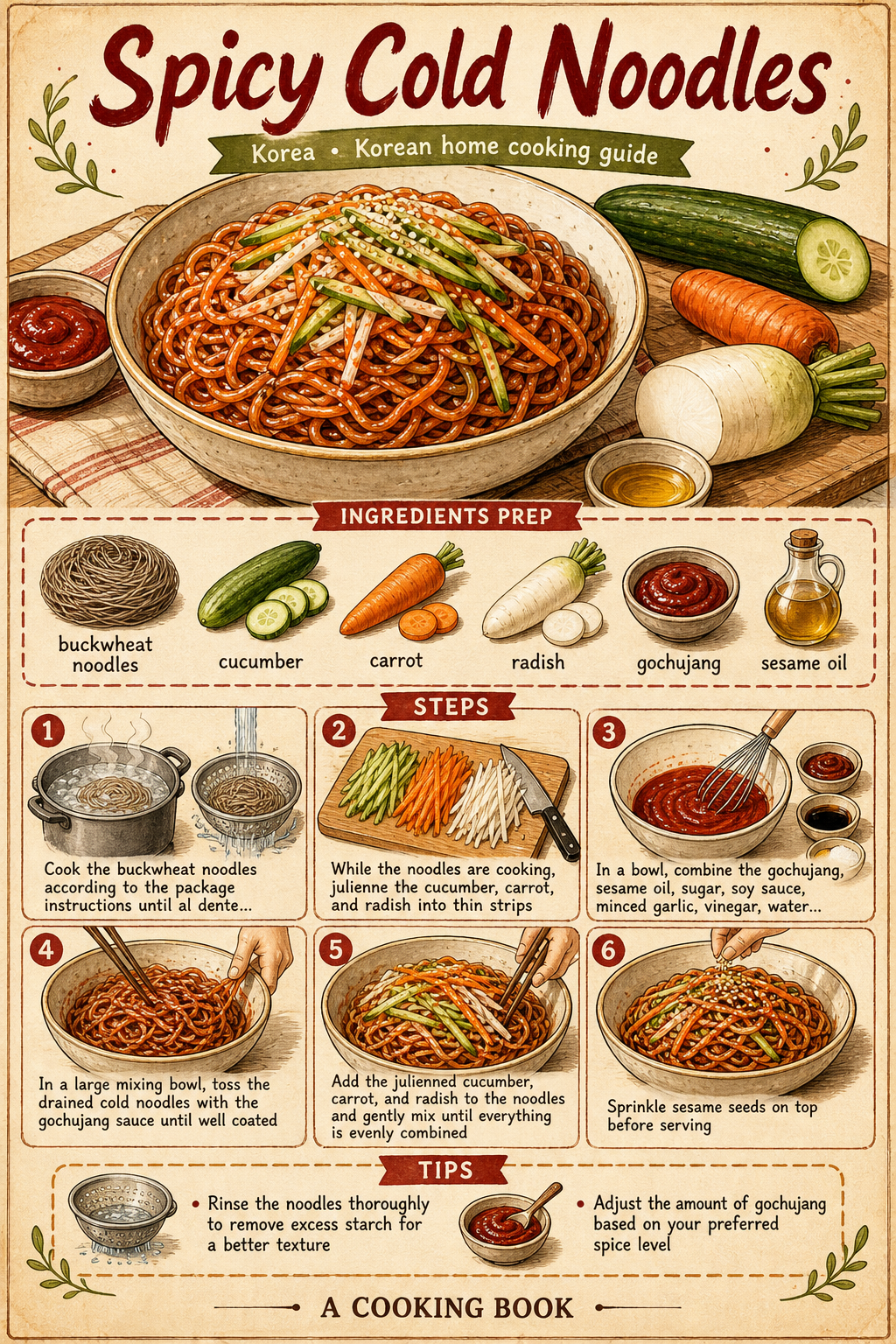
Illustrated cooking guide
Step-by-step visual method
A polished English infographic for the whole cooking flow, paired with the full written recipe below for detail and SEO.
Written method
Instructions
Read through once, then cook at your own pace with the illustrated guide above.
- 1
Cook the somyeon until just tender, then rinse vigorously under cold water and drain well.
- 2
While the noodles are cooking, julienne the cucumber, carrot, and radish into thin strips.
- 3
In a bowl, combine the gochujang, sesame oil, sugar, soy sauce, minced garlic, vinegar, water, and a pinch of salt and pepper; mix well to create the sauce.
- 4
In a large mixing bowl, toss the drained cold noodles with the gochujang sauce until well coated.
- 5
Add the julienned cucumber, carrot, and radish to the noodles and gently mix until everything is evenly combined.
- 6
Sprinkle sesame seeds on top before serving.
Cook notes
Tips
Rinse the noodles thoroughly to remove excess starch for a better texture.
Adjust the amount of gochujang based on your preferred spice level.
Cook smarter
Helpful notes
Practical storage, serving, swap, and troubleshooting notes for a better first try.
Storage Tips
- Store leftovers in an airtight container in the refrigerator for up to 2 days.
- When reheating, add a splash of water to prevent the noodles from drying out.
Substitutions
- For a gluten-free option, use rice noodles instead of buckwheat noodles.
- You can replace gochujang with sambar powder for a different spice profile.
What to Serve With
- Pickled vegetables
- Korean dumplings
- Kimchi
Common Mistakes
- Not rinsing the noodles properly can lead to clumping.
- Adding too much sauce may overpower the dish; start with a little and adjust.
Recipe FAQ
Can I use another type of noodle?
Yes, you can substitute buckwheat noodles with rice noodles or soba noodles.
How spicy is this dish?
The spice level largely depends on the amount of gochujang you add, so feel free to adjust according to your taste.
Can I make this dish ahead of time?
Yes, you can prepare the noodles and sauce in advance and mix them just before serving.
Kitchen tools
Helpful Tools for This Recipe
A light, editable placeholder for future partner recommendations. No real affiliate links are enabled yet.
Rice cooker
Good for steady rice, grains, and meal-prep bowls.
Blender
Helpful for smooth sauces, soups, marinades, and purees.
Chef knife
A basic prep tool for vegetables, herbs, aromatics, and proteins.
Cutting board
Keeps prep organized for chopping, slicing, and staging ingredients.
Measuring spoons
Useful for balancing spices, salt, acids, and sauces.
Some links may be affiliate links. As an Amazon Associate or partner, we may earn from qualifying purchases when enabled. Read the Affiliate Disclosure.
Cook along weekly
Want more illustrated recipes like Bibim Guksu (Korean Spicy Cold Noodles)?
Join the World Recipe Letter for global home-cooking ideas and visual recipe guides.
Join the World Recipe Letter
Get 5 illustrated recipes every week.
No account needed. Unsubscribe when email delivery is connected.
Cook next
You might also like
More flavors from the same country or nearby pantry style.
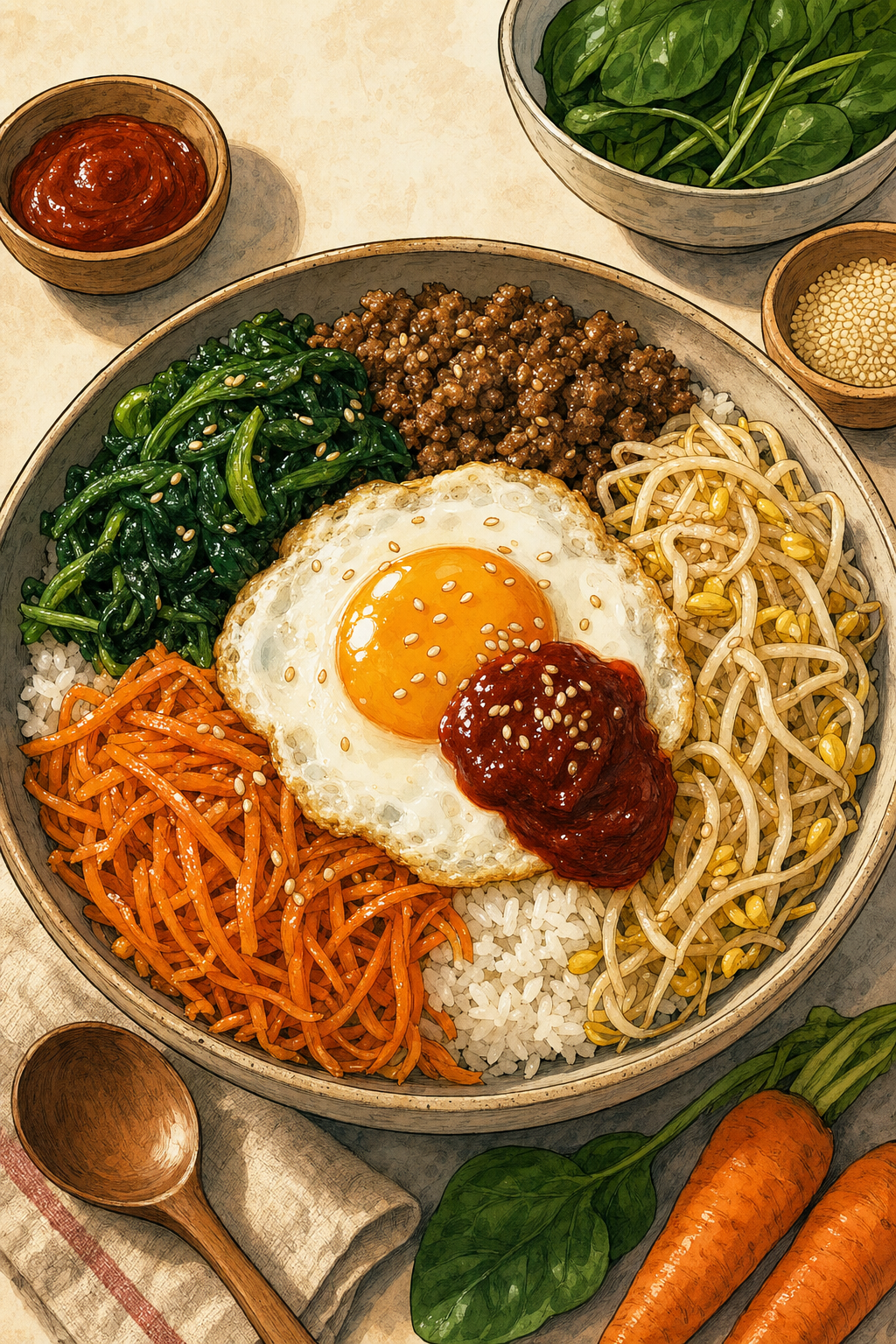
Bibimbap
A colorful Korean rice bowl with seasoned vegetables, beef, egg, sesame, and gochujang.
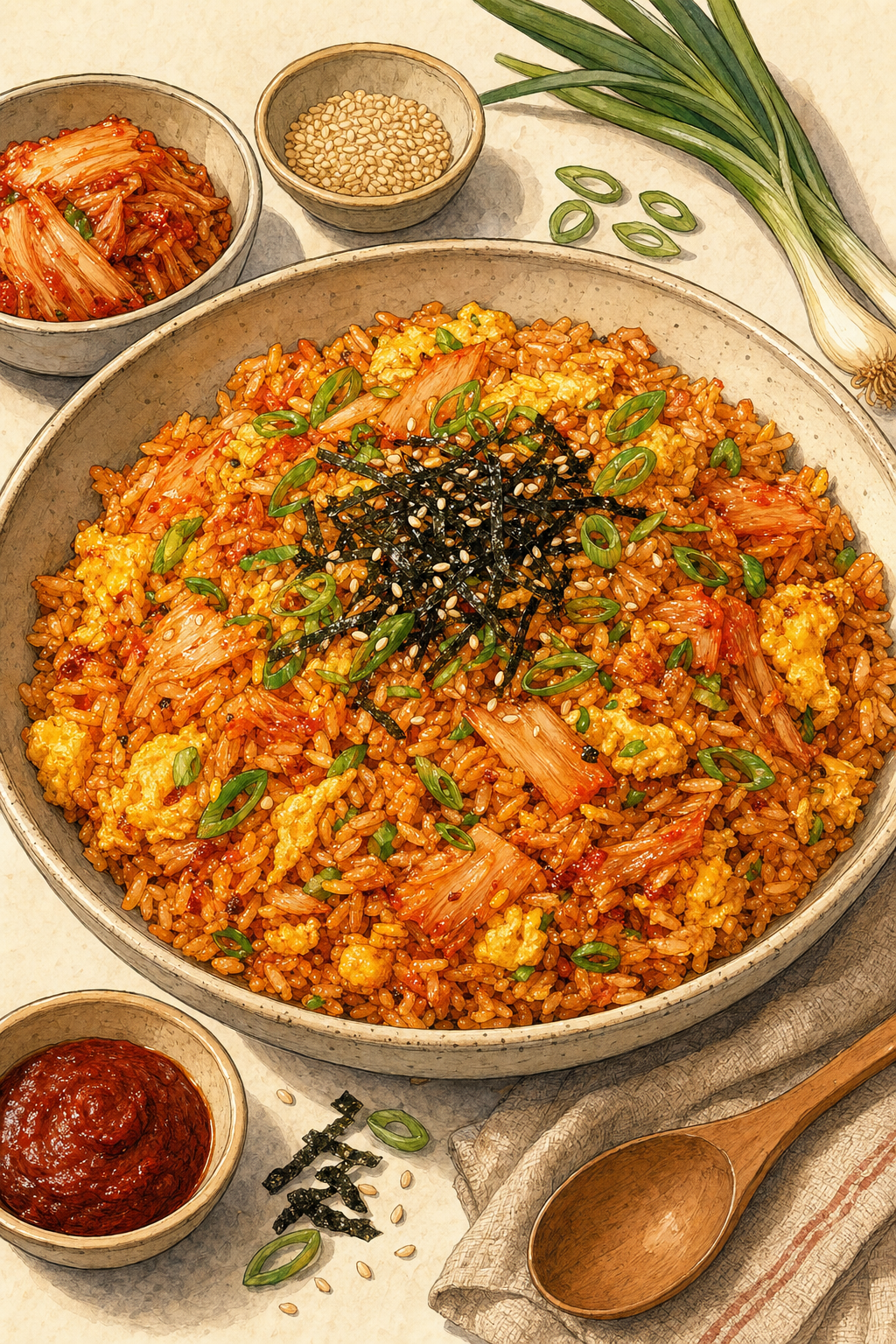
Kimchi Fried Rice
A fast skillet fried rice with kimchi, gochujang, scallions, sesame, and egg.
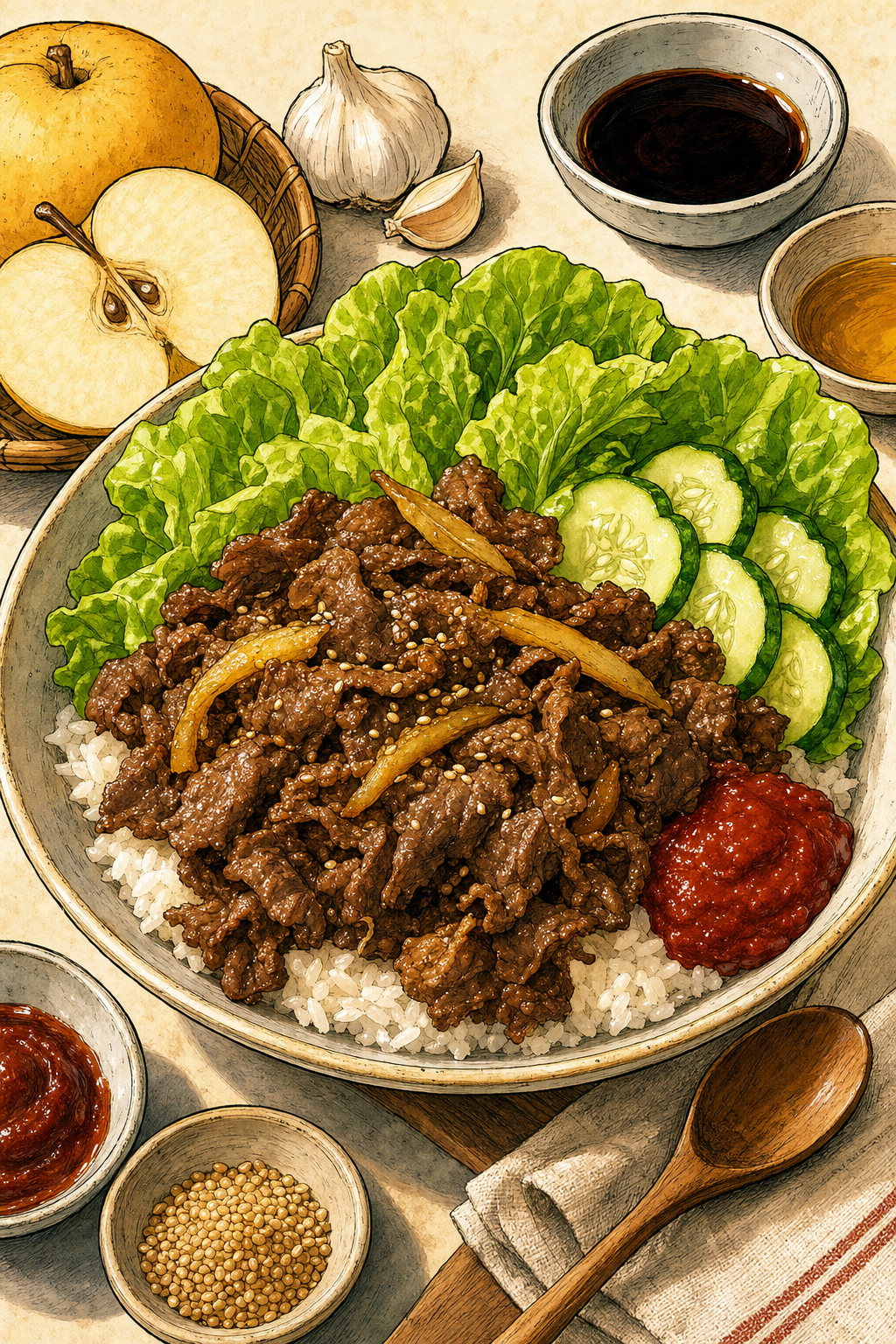
Bulgogi Lettuce Bowls
Sweet-savory marinated beef served with rice, crisp lettuce, cucumber, and a quick gochujang sauce.