Doenjang Jjigae (Korean Soybean Paste Stew)
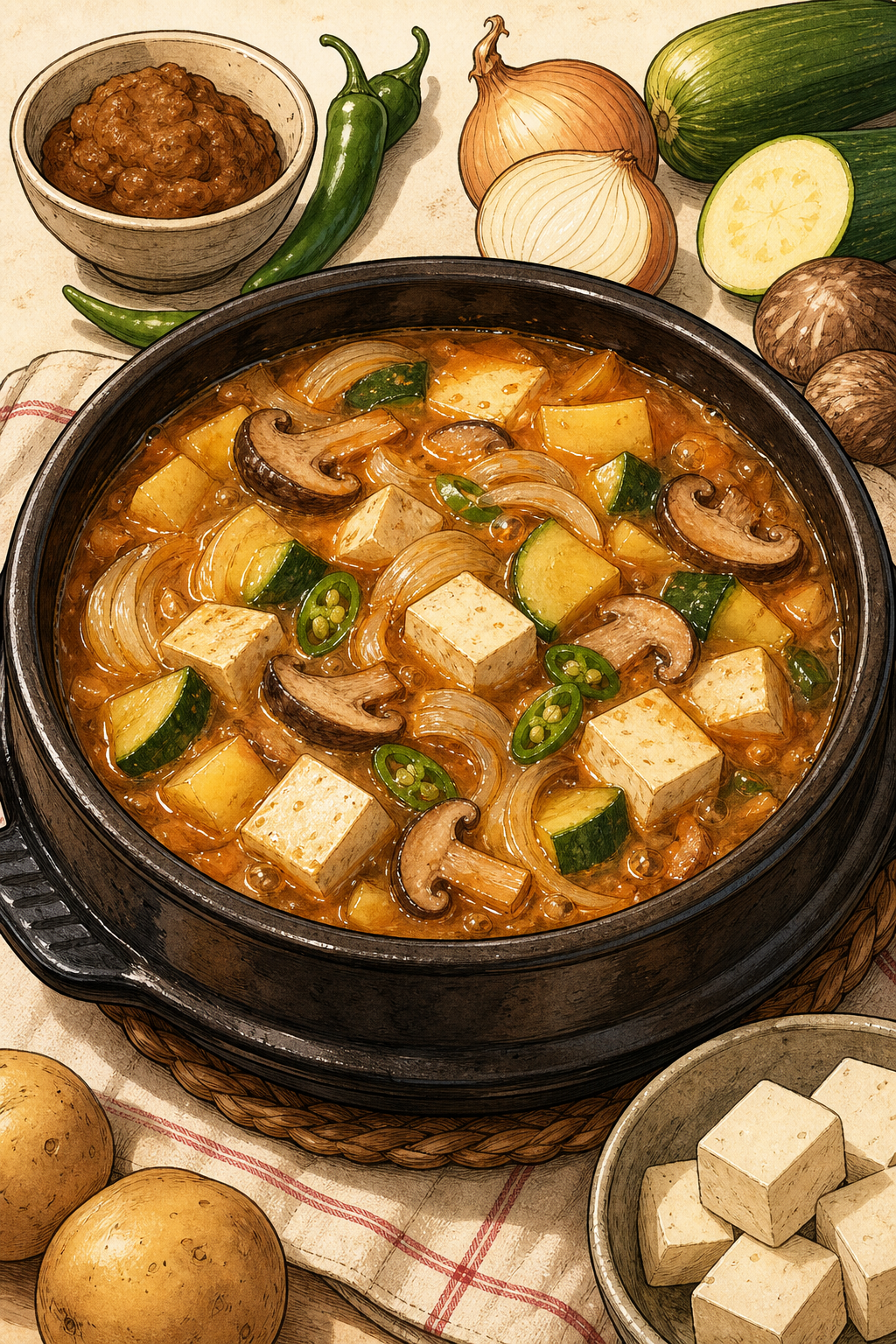
Soybean Paste Stew, known as Doenjang Jjigae in Korean, is a hearty and nutritious dish that combines vegetables and tofu in a savory soybean paste broth. It's a staple in Korean homes, perfect for a comforting meal any day of the week.
Plan and shop
Save this recipe for real-life cooking
Build a local shopping list or place this recipe into a weekly meal plan. No account is required.
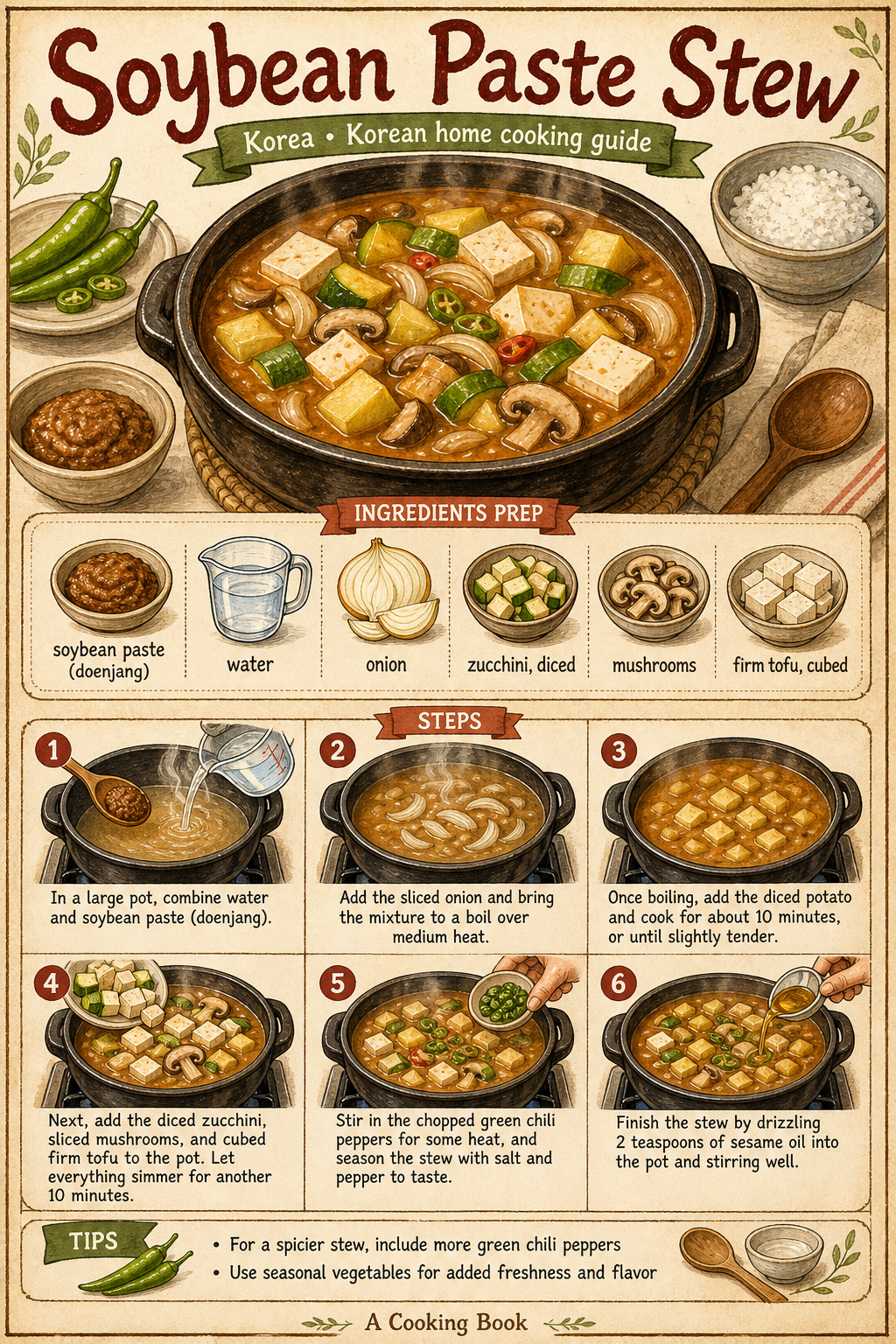
Illustrated cooking guide
Step-by-step visual method
A polished English infographic for the whole cooking flow, paired with the full written recipe below for detail and SEO.
Written method
Instructions
Read through once, then cook at your own pace with the illustrated guide above.
- 1
In a large pot, whisk the doenjang into the anchovy-kelp stock until mostly dissolved.
- 2
Add the sliced onion and bring the mixture to a boil over medium heat.
- 3
Once boiling, add the diced potato and cook for about 10 minutes, or until slightly tender.
- 4
Next, add the diced zucchini, sliced mushrooms, and cubed firm tofu to the pot. Let everything simmer for another 10 minutes.
- 5
Stir in the chopped green chili peppers and simmer for 2-3 minutes more.
- 6
Taste before adding any salt because doenjang is already salty, then serve bubbling hot without a sesame-oil finish.
Cook notes
Tips
For a spicier stew, include more green chili peppers.
Use seasonal vegetables for added freshness and flavor.
Let the stew simmer longer to enhance the flavors if you have the time.
Cook smarter
Helpful notes
Practical storage, serving, swap, and troubleshooting notes for a better first try.
Storage Tips
- Store any leftovers in an airtight container in the refrigerator for up to 3 days.
- To reheat, add a little water to the pot to refresh the stew as it may thicken over time.
Substitutions
- For a vegetarian option, ensure the soybean paste is vegan-friendly.
- Replace firm tofu with tempeh for added texture.
What to Serve With
- Steamed rice
- Kimchi
- Pickled vegetables
Common Mistakes
- Not properly dissolving the soybean paste in water, which may lead to a clumpy texture.
- Overcooking the vegetables, making them mushy instead of tender.
Recipe FAQ
Can I use different vegetables in this stew?
Yes, you can substitute or add vegetables like spinach, carrots, or radish as per your preference.
How long does this stew last in the fridge?
It can be stored in the fridge for up to 3 days.
Is soybean paste gluten-free?
Check the label on the soybean paste, as some brands may contain gluten.
Kitchen tools
Helpful Tools for This Recipe
A light, editable placeholder for future partner recommendations. No real affiliate links are enabled yet.
Saucepan
Useful for simmering sauces, soups, grains, and small-batch stews.
Chef knife
A basic prep tool for vegetables, herbs, aromatics, and proteins.
Cutting board
Keeps prep organized for chopping, slicing, and staging ingredients.
Measuring spoons
Useful for balancing spices, salt, acids, and sauces.
Some links may be affiliate links. As an Amazon Associate or partner, we may earn from qualifying purchases when enabled. Read the Affiliate Disclosure.
Cook along weekly
Want more illustrated recipes like Doenjang Jjigae (Korean Soybean Paste Stew)?
Join the World Recipe Letter for global home-cooking ideas and visual recipe guides.
Join the World Recipe Letter
Get 5 illustrated recipes every week.
No account needed. Unsubscribe when email delivery is connected.
Cook next
You might also like
More flavors from the same country or nearby pantry style.
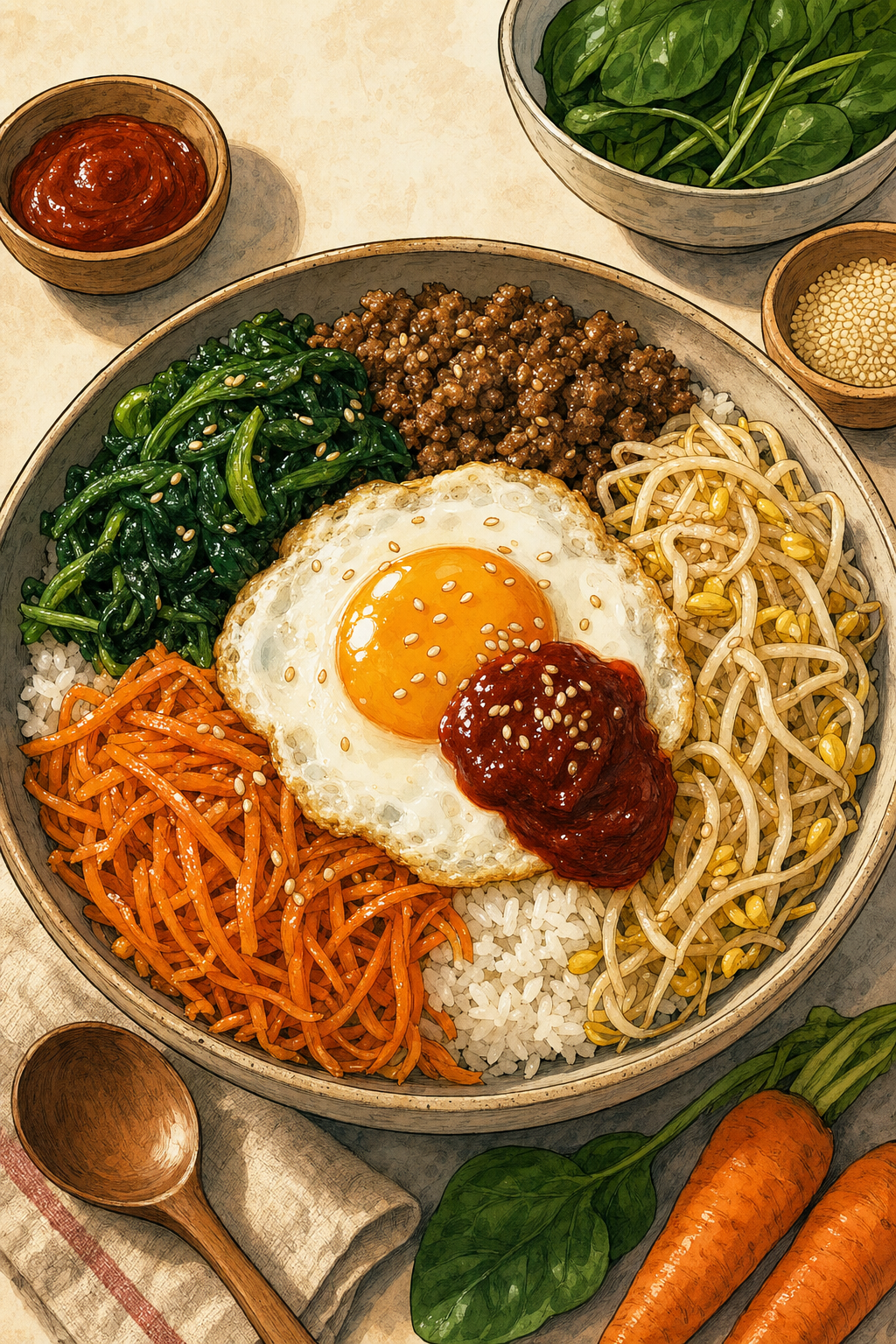
Bibimbap
A colorful Korean rice bowl with seasoned vegetables, beef, egg, sesame, and gochujang.
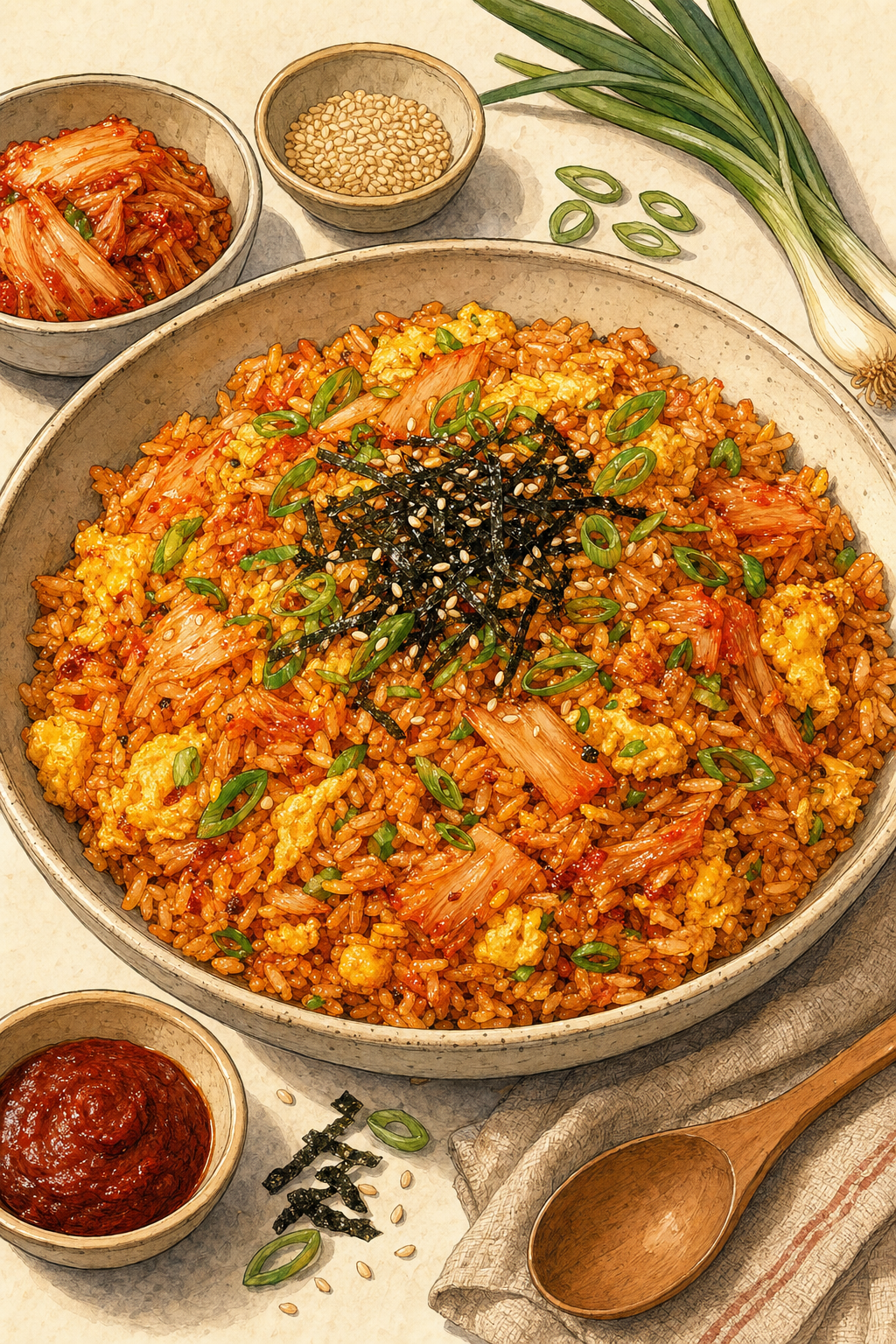
Kimchi Fried Rice
A fast skillet fried rice with kimchi, gochujang, scallions, sesame, and egg.
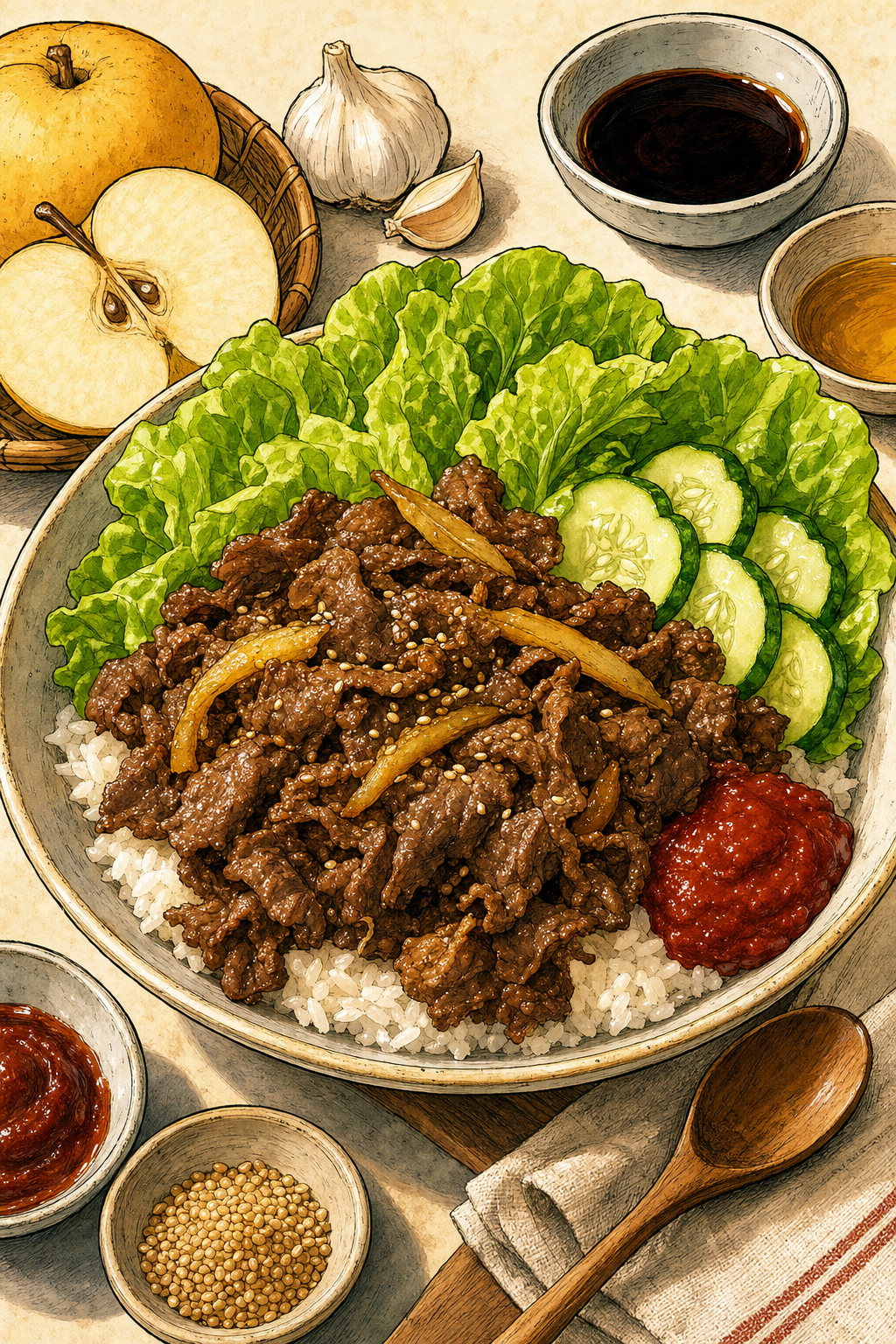
Bulgogi Lettuce Bowls
Sweet-savory marinated beef served with rice, crisp lettuce, cucumber, and a quick gochujang sauce.