Samgyeopsal-gui with Ssamjang and Lettuce Wraps
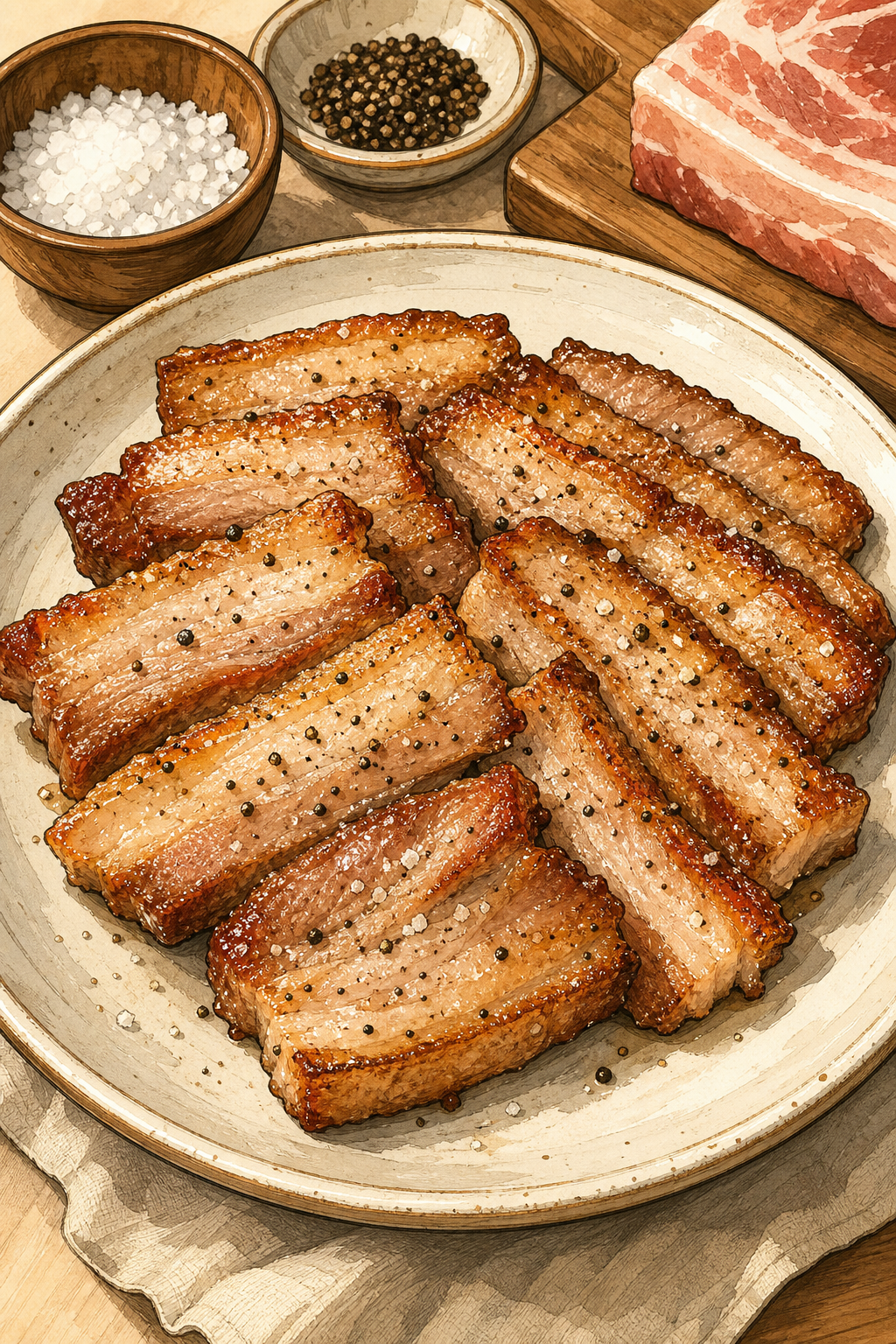
This traditional Korean Pork Belly with Salt dish features succulent slices of pork belly that are seasoned to perfection for a delightful taste experience. Rich in flavor and easy to prepare, it's a staple that everyone will love!
Plan and shop
Save this recipe for real-life cooking
Build a local shopping list or place this recipe into a weekly meal plan. No account is required.
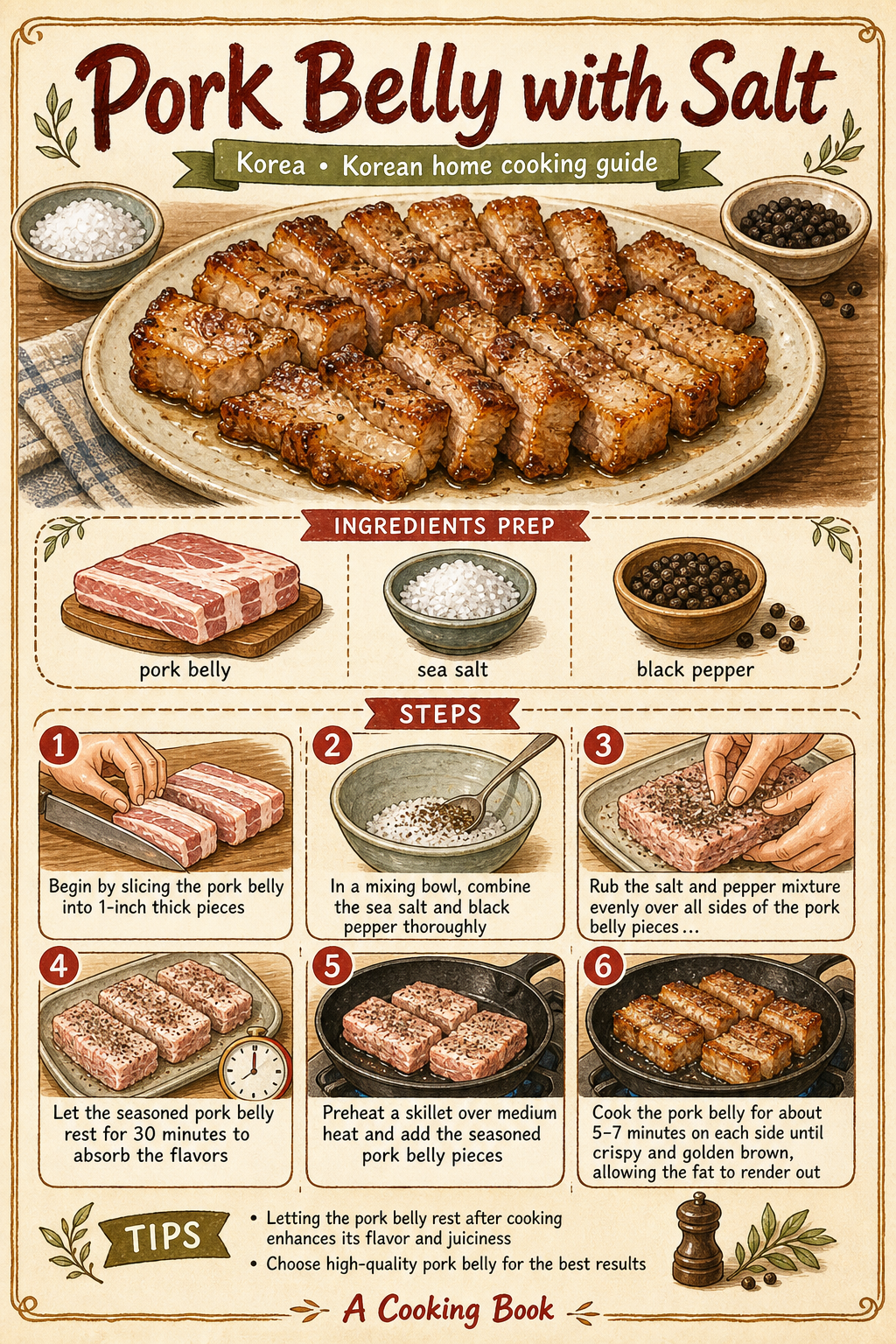
Illustrated cooking guide
Step-by-step visual method
A polished English infographic for the whole cooking flow, paired with the full written recipe below for detail and SEO.
Written method
Instructions
Read through once, then cook at your own pace with the illustrated guide above.
- 1
Heat a tabletop grill or heavy skillet over medium-high heat without adding oil.
- 2
Arrange the pork belly slices in a single layer and grill until the fat renders and both sides are deeply browned.
- 3
Grill the sliced garlic briefly in a little rendered pork fat until golden.
- 4
Cut the cooked pork belly into bite-size pieces with kitchen scissors and sprinkle lightly with coarse salt.
- 5
Serve immediately with lettuce leaves, grilled garlic, ssamjang, steamed rice, and kimchi for wrapping at the table.
Cook notes
Tips
Letting the pork belly rest after cooking enhances its flavor and juiciness.
Choose high-quality pork belly for the best results.
Cook smarter
Helpful notes
Practical storage, serving, swap, and troubleshooting notes for a better first try.
Storage Tips
- Store cooked pork belly in the refrigerator for up to 3 days.
- Reheat in a skillet to maintain crispiness.
Substitutions
- Instead of sea salt, you can use kosher salt.
- Black pepper can be swapped with white pepper for a milder flavor.
What to Serve With
- Steamed rice
- Kimchi
- Sautéed vegetables
Common Mistakes
- Not letting the pork belly rest after seasoning can make it bland.
- Overcooking the meat can result in dryness.
Recipe FAQ
Can I use other cuts of meat for this recipe?
Yes, you can use pork shoulder or ribs, but cooking times may vary.
What can I do with leftovers?
You can refrigerate leftovers in an airtight container and reheat them in the skillet or microwave.
Is it necessary to rest the meat after cooking?
Yes, resting allows the juices to redistribute for a more flavorful bite.
Kitchen tools
Helpful Tools for This Recipe
A light, editable placeholder for future partner recommendations. No real affiliate links are enabled yet.
Rice cooker
Good for steady rice, grains, and meal-prep bowls.
Chef knife
A basic prep tool for vegetables, herbs, aromatics, and proteins.
Cutting board
Keeps prep organized for chopping, slicing, and staging ingredients.
Measuring spoons
Useful for balancing spices, salt, acids, and sauces.
Some links may be affiliate links. As an Amazon Associate or partner, we may earn from qualifying purchases when enabled. Read the Affiliate Disclosure.
Cook along weekly
Want more illustrated recipes like Samgyeopsal-gui with Ssamjang and Lettuce Wraps?
Join the World Recipe Letter for global home-cooking ideas and visual recipe guides.
Join the World Recipe Letter
Get 5 illustrated recipes every week.
No account needed. Unsubscribe when email delivery is connected.
Cook next
You might also like
More flavors from the same country or nearby pantry style.
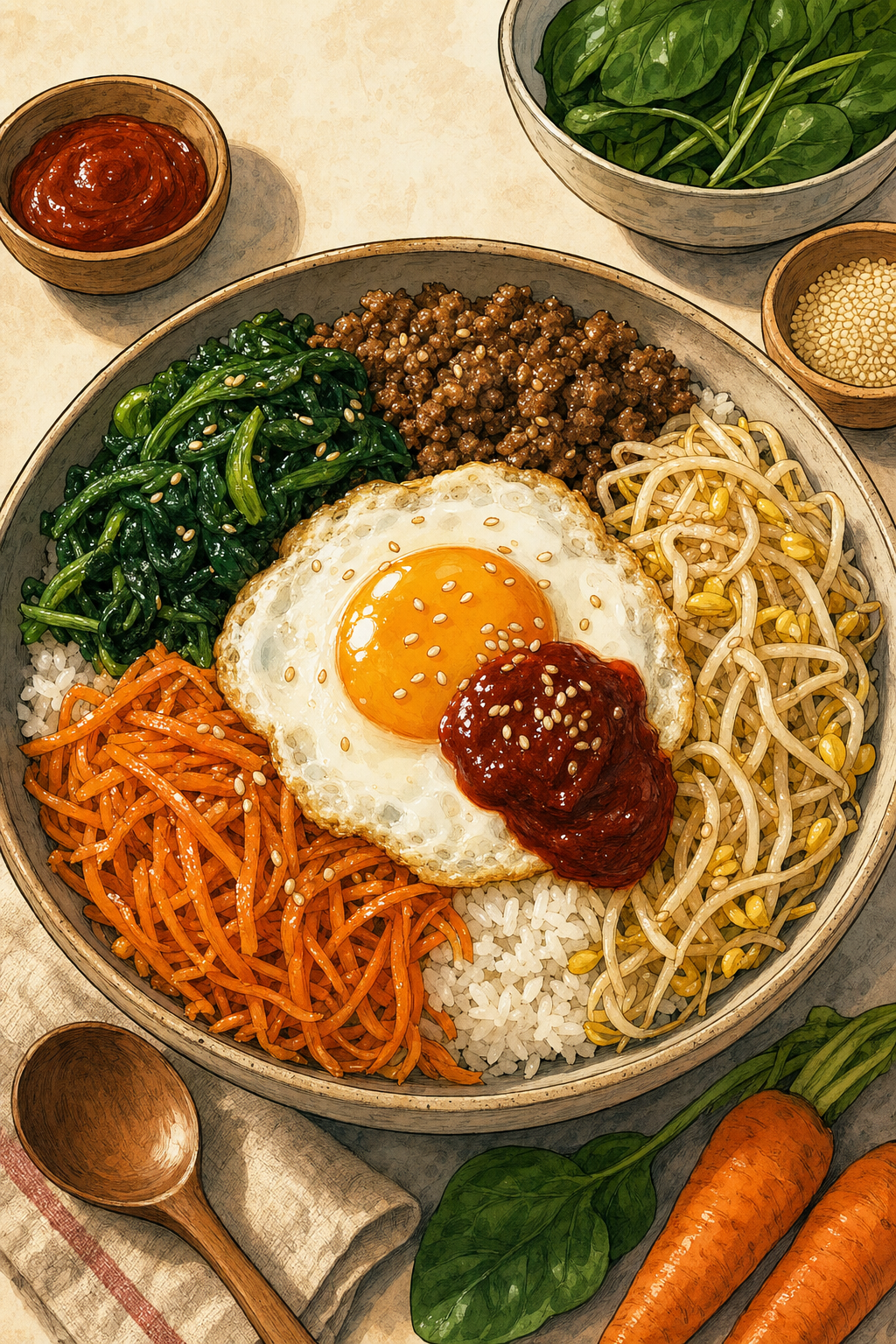
Bibimbap
A colorful Korean rice bowl with seasoned vegetables, beef, egg, sesame, and gochujang.
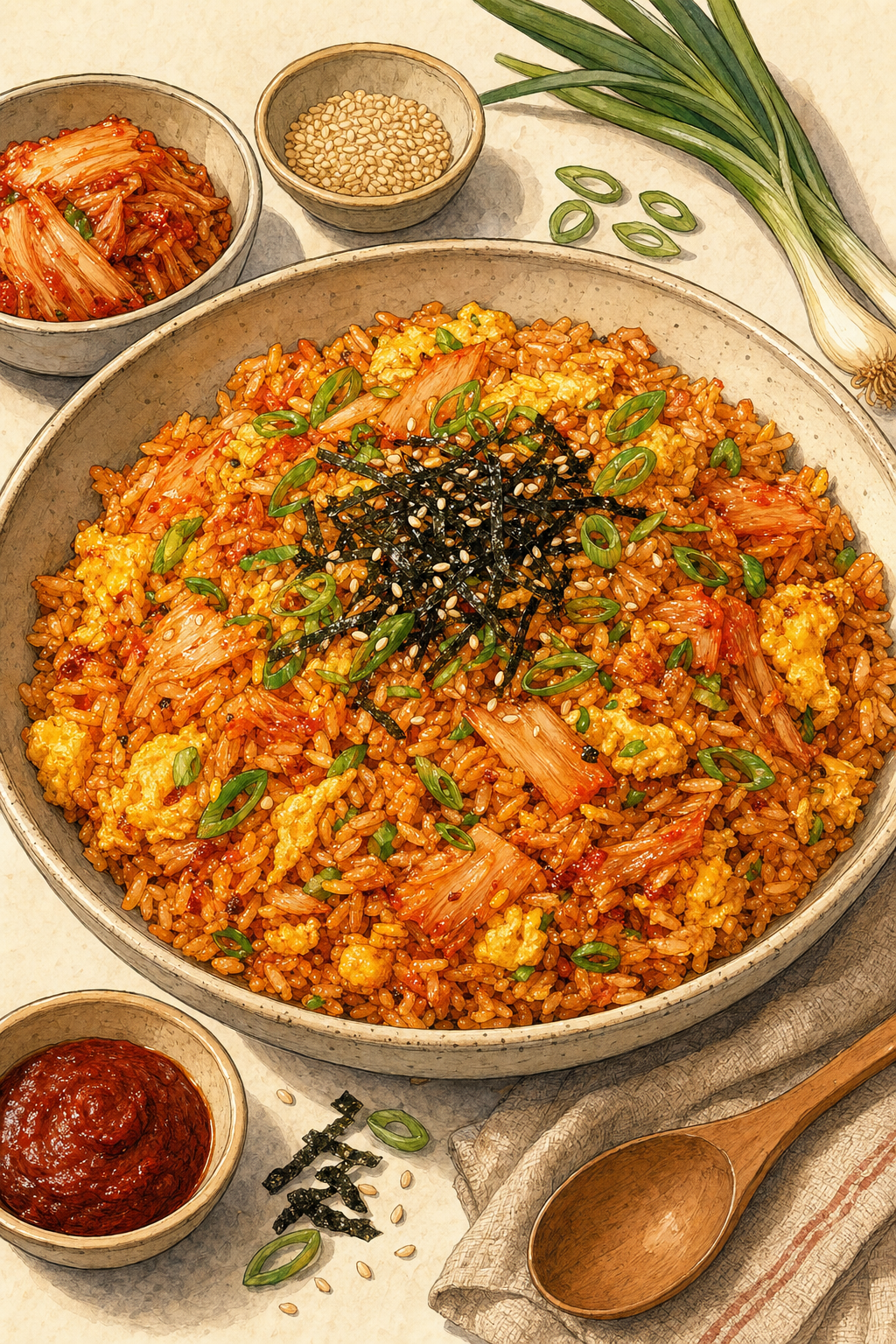
Kimchi Fried Rice
A fast skillet fried rice with kimchi, gochujang, scallions, sesame, and egg.
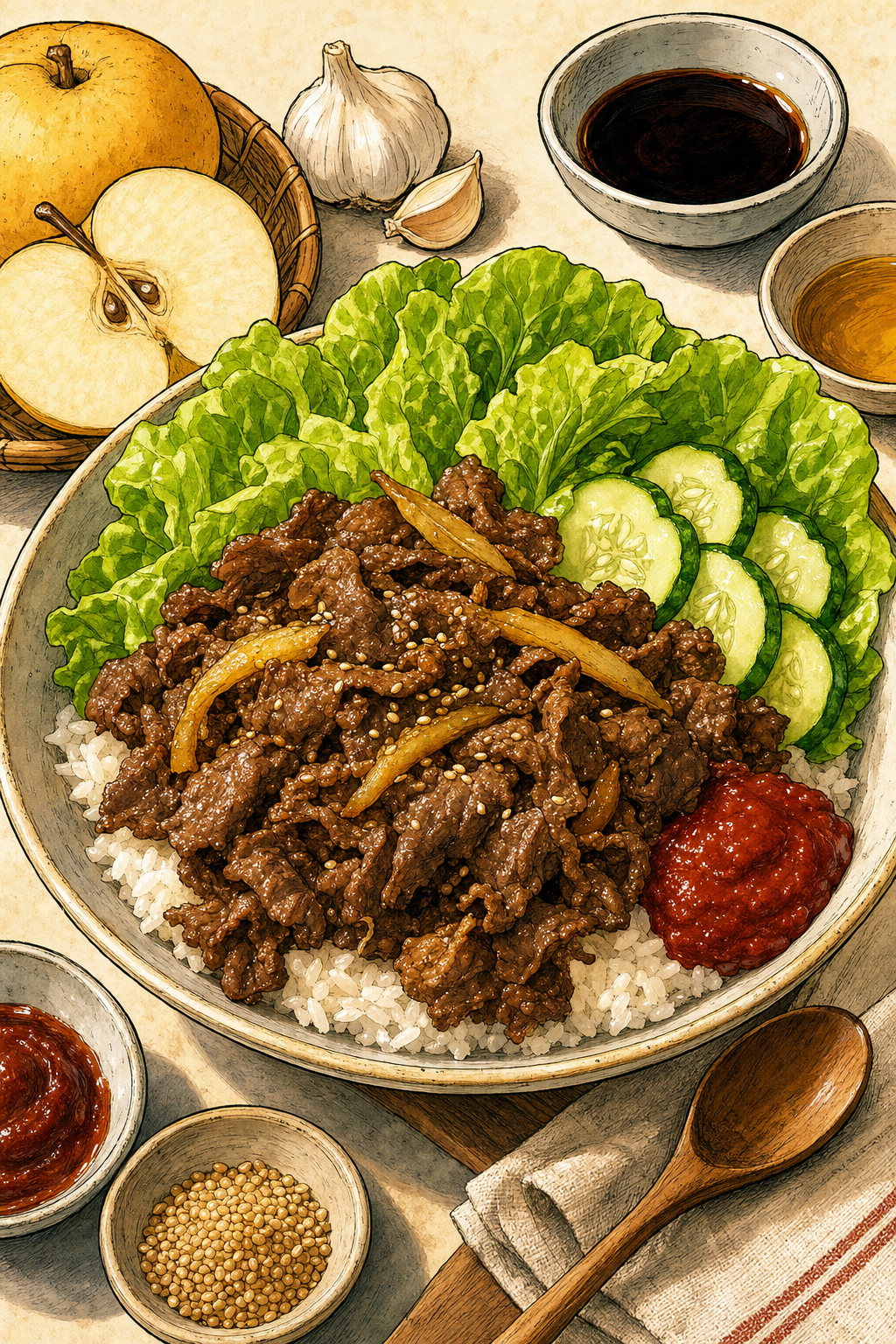
Bulgogi Lettuce Bowls
Sweet-savory marinated beef served with rice, crisp lettuce, cucumber, and a quick gochujang sauce.