Traditional Bulgarian Mekitsi: Yeasted Fried Dough with Jam or Sirene
Bulgarian mekitsi are soft yeasted breakfast breads pulled by hand into irregular flat rounds with thin centers and puffy rims, then fried until blistered and golden. They are not doughnut balls and are served hot with jam, honey, powdered sugar or sirene.

Plan and shop
Save this recipe for real-life cooking
Build a local shopping list or place this recipe into a weekly meal plan. No account is required.
Illustrated cooking guide
Step-by-step visual method
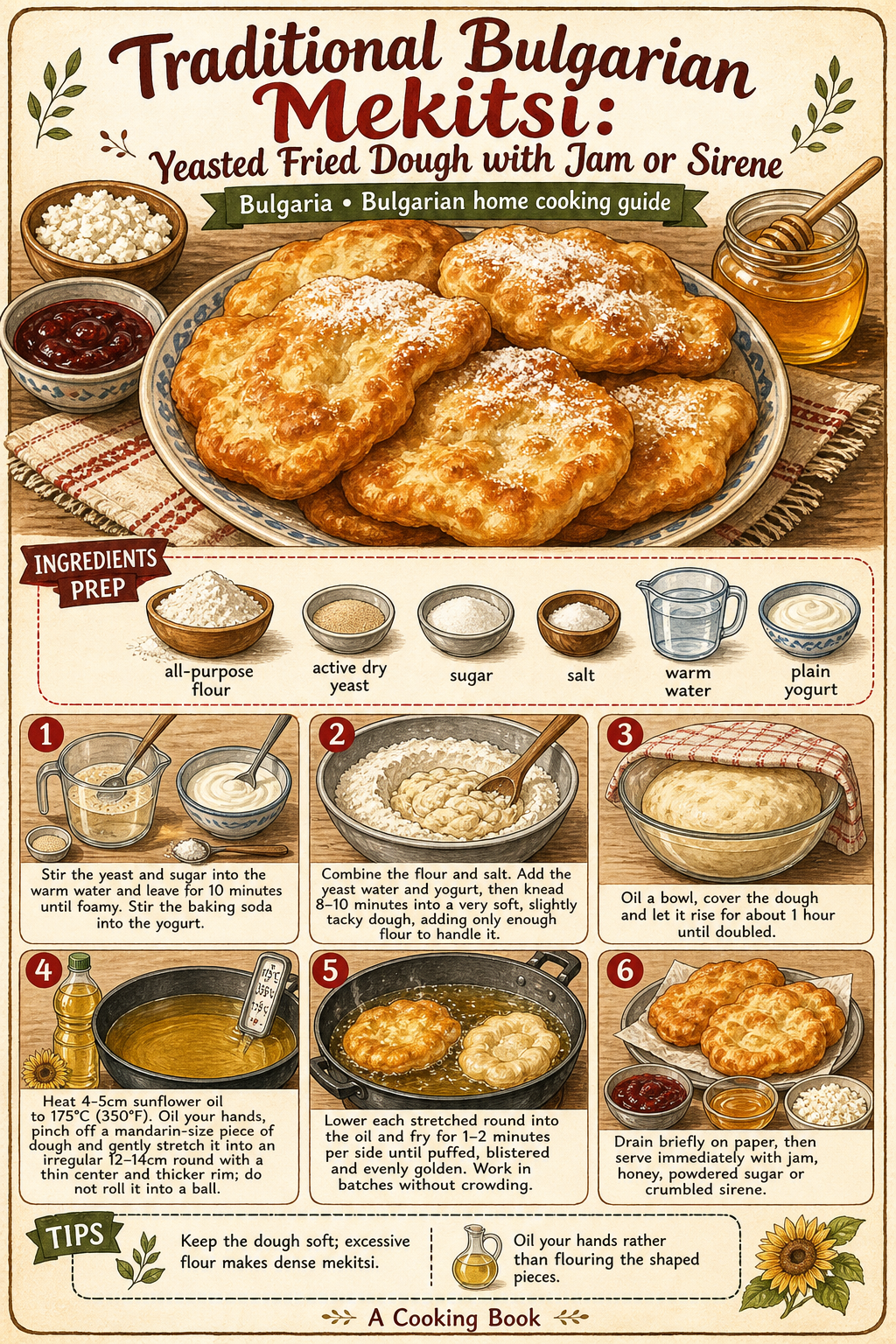
A polished English infographic for the whole cooking flow, paired with the full written recipe below for detail and SEO.
Written method
Instructions
Read through once, then cook at your own pace with the illustrated guide above.
- 1
Stir the yeast and sugar into the warm water and leave for 10 minutes until foamy. Stir the baking soda into the yogurt.
- 2
Combine the flour and salt. Add the yeast water and yogurt, then knead 8-10 minutes into a very soft, slightly tacky dough, adding only enough flour to handle it.
- 3
Oil a bowl, cover the dough and let it rise for about 1 hour until doubled.
- 4
Heat 4-5cm sunflower oil to 175°C (350°F). Oil your hands, pinch off a mandarin-size piece of dough and gently stretch it into an irregular 12-14cm round with a thin center and thicker rim; do not roll it into a ball.
- 5
Lower each stretched round into the oil and fry for 1-2 minutes per side until puffed, blistered and evenly golden. Work in batches without crowding.
- 6
Drain briefly on paper, then serve immediately with jam, honey, powdered sugar or crumbled sirene.
Cook notes
Tips
Keep the dough soft; excessive flour makes dense mekitsi.
Oil your hands rather than flouring the shaped pieces.
Stretch a thin center so each piece fries as a flat bread, not a dough ball.
Cook smarter
Helpful notes
Practical storage, serving, swap, and troubleshooting notes for a better first try.
Storage Tips
- Store leftover mekitsi in an airtight container at room temperature for up to 2 days.
- Reheat fried mekitsi in the oven at 350°F for about 5 minutes to regain crispiness.
Substitutions
- Replace warm milk with almond milk for a dairy-free version.
- Use a neutral high-heat oil if sunflower oil is unavailable.
What to Serve With
- A cup of yogurt for a refreshing contrast.
- A side of fresh fruit to balance the sweetness.
Common Mistakes
- Leaving the one-hour rise out of the total time.
- Shaping golf-ball pieces and frying them as doughnut balls.
- Using butter as a deep-frying substitute.
Recipe FAQ
Can I make mekitsi in advance?
Yes, you can prepare the dough ahead of time and store it in the refrigerator for up to 24 hours before frying.
What type of jam works best?
Any type of fruit jam, such as strawberry or apricot, pairs beautifully with mekitsi.
Is there a gluten-free option for this recipe?
You can substitute all-purpose flour with a gluten-free flour blend, but results may vary.
Kitchen tools
Helpful Tools for This Recipe
A light, editable placeholder for future partner recommendations. No real affiliate links are enabled yet.
Rice cooker
Good for steady rice, grains, and meal-prep bowls.
Chef knife
A basic prep tool for vegetables, herbs, aromatics, and proteins.
Cutting board
Keeps prep organized for chopping, slicing, and staging ingredients.
Measuring spoons
Useful for balancing spices, salt, acids, and sauces.
Some links may be affiliate links. As an Amazon Associate or partner, we may earn from qualifying purchases when enabled. Read the Affiliate Disclosure.
Cook along weekly
Want more illustrated recipes like Traditional Bulgarian Mekitsi: Yeasted Fried Dough with Jam or Sirene?
Join the World Recipe Letter for global home-cooking ideas and visual recipe guides.
Join the World Recipe Letter
Get 5 illustrated recipes every week.
No account needed. Unsubscribe when email delivery is connected.
Cook next
You might also like
More flavors from the same country or nearby pantry style.
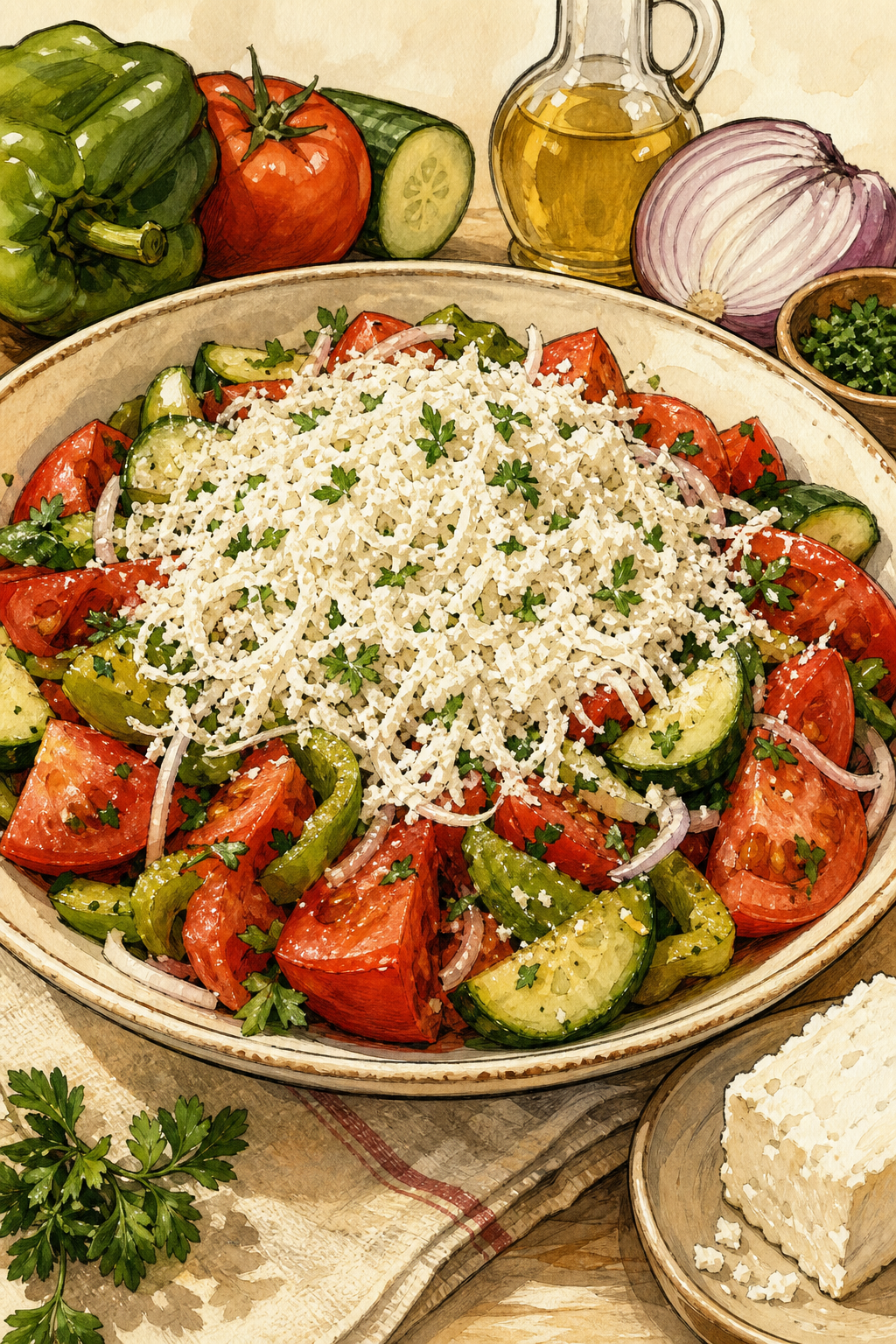
Traditional Bulgarian Shopska Salad with Tomatoes, Cucumbers and Sirene
Shopska salad is a Bulgarian summer salad of ripe tomatoes, cucumber, pepper and a little onion, lightly dressed with sunflower oil and finished with a thick snowy cap of finely grated sirene. The cheese stays on top rather than being tossed through the vegetables.
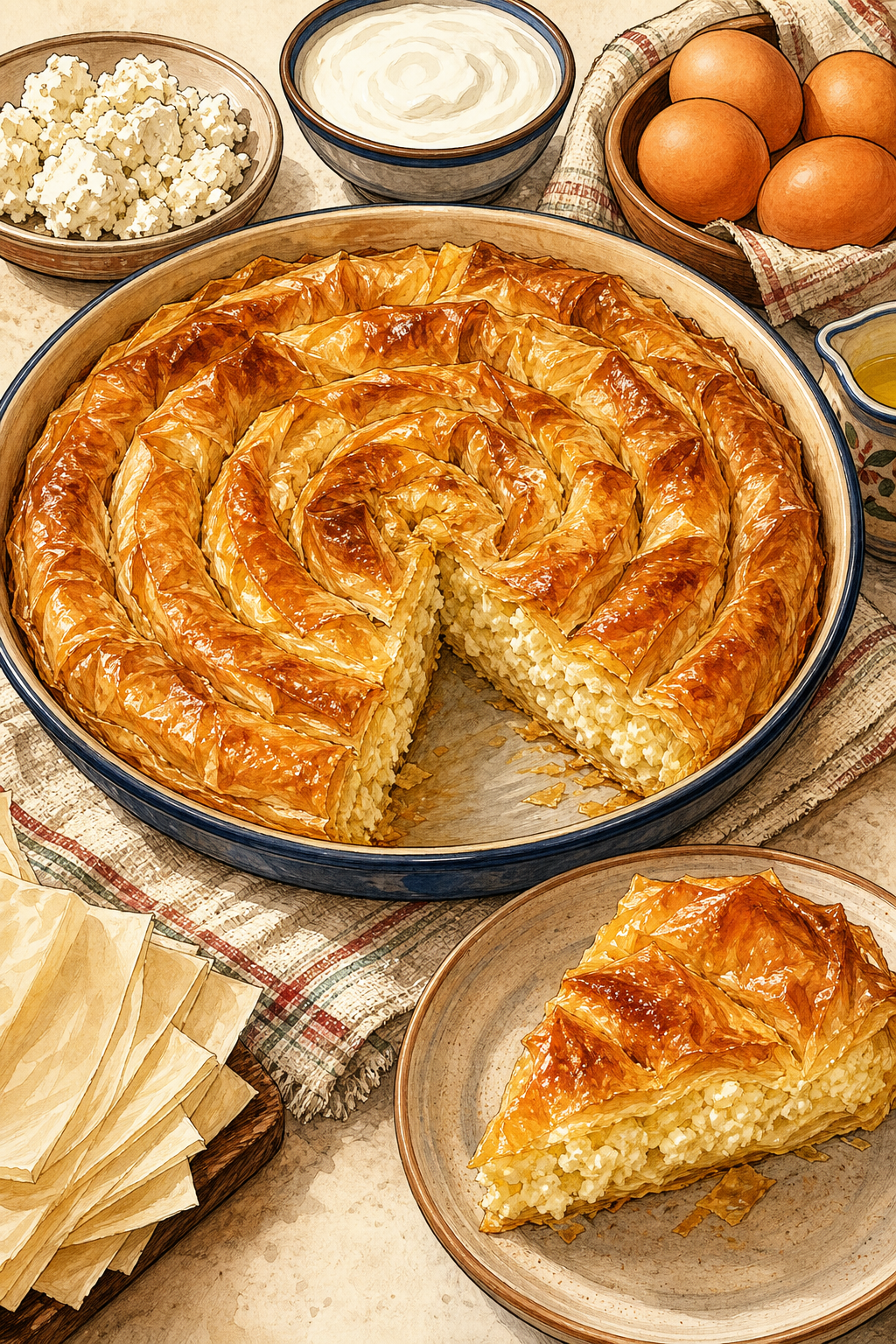
Traditional Bulgarian Banitsa with Sirene and Eggs
Traditional Bulgarian banitsa is built from thin phyllo sheets brushed with butter or sunflower oil and distributed with a loose filling of sirene, eggs and yogurt. The filled sheets are gently rolled into a round pan so the pastry stays crisp outside and tender between the folds.
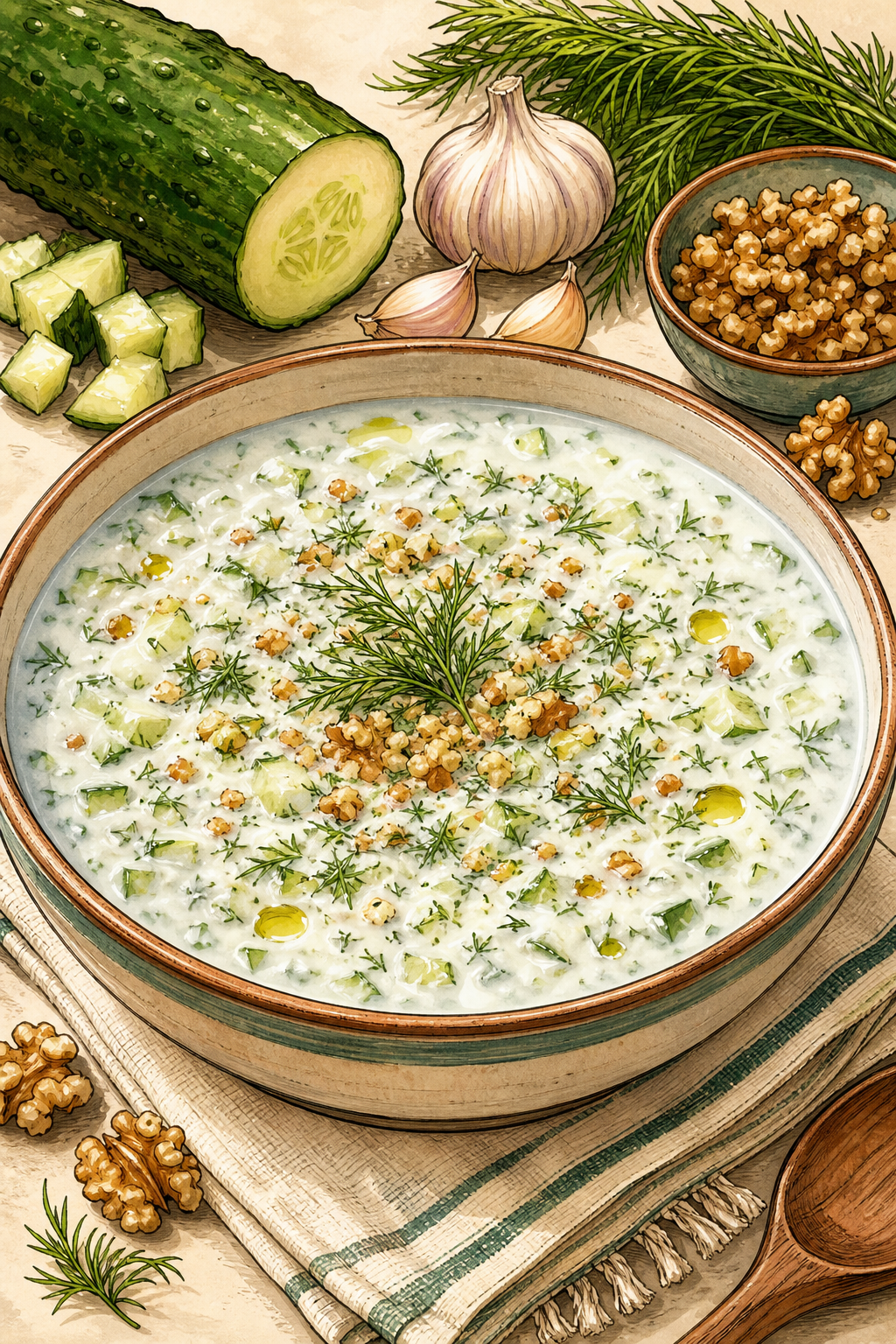
Traditional Bulgarian Tarator: Cold Yogurt and Cucumber Soup
Tarator is Bulgaria's cold yogurt and cucumber soup, loosened with icy water and flavored with garlic, dill, walnuts and sunflower oil. It should be pourable, chilled and speckled with cucumber and finely crushed walnut rather than thick like a dip.