Zaru Soba
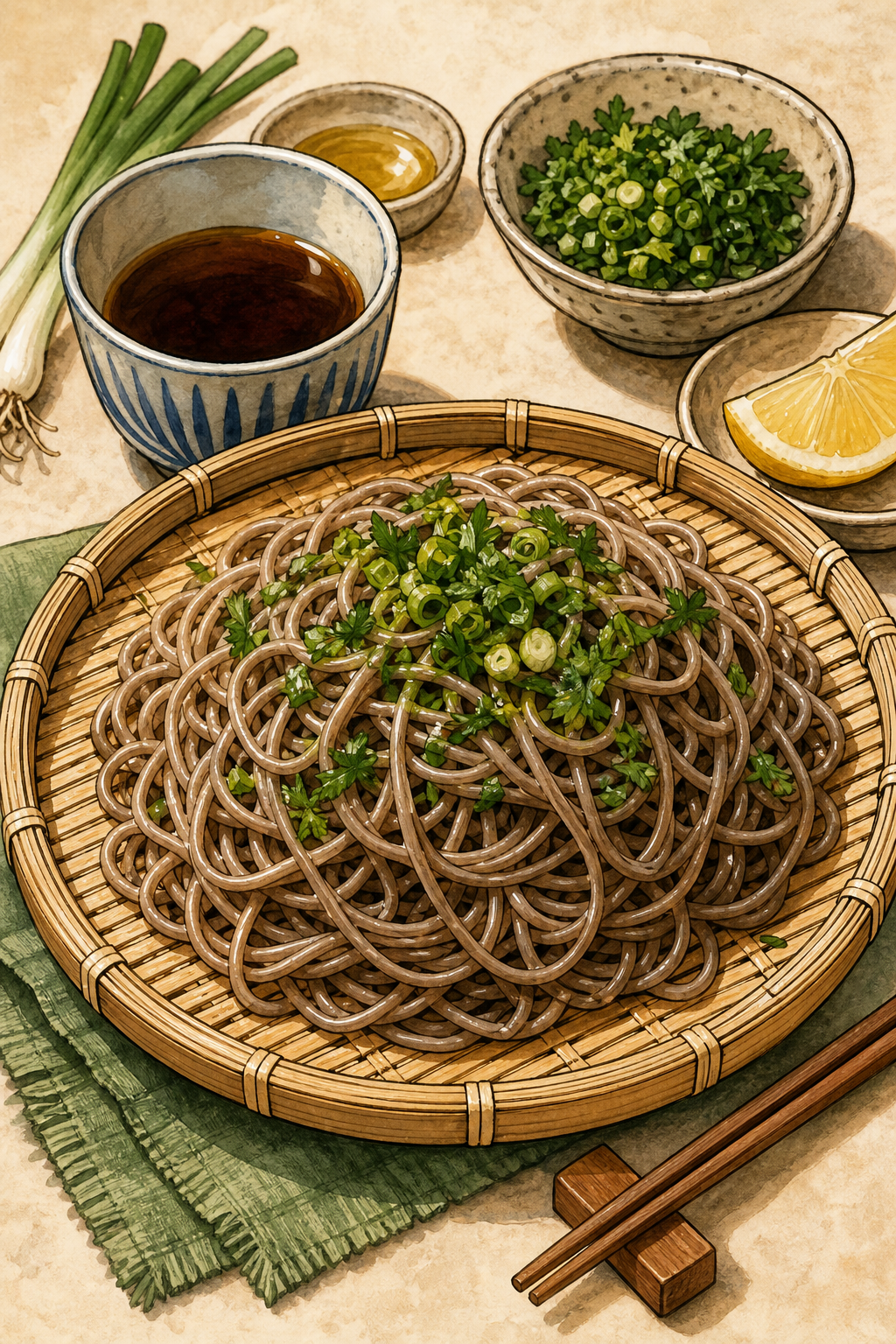
Zaru Soba is a refreshing Japanese dish made with buckwheat noodles served chilled. It’s accompanied by a simple dipping sauce and can be garnished authentically with finely chopped nori or green onions for an authentic experience.
Plan and shop
Save this recipe for real-life cooking
Build a local shopping list or place this recipe into a weekly meal plan. No account is required.
Illustrated cooking guide
Step-by-step visual method
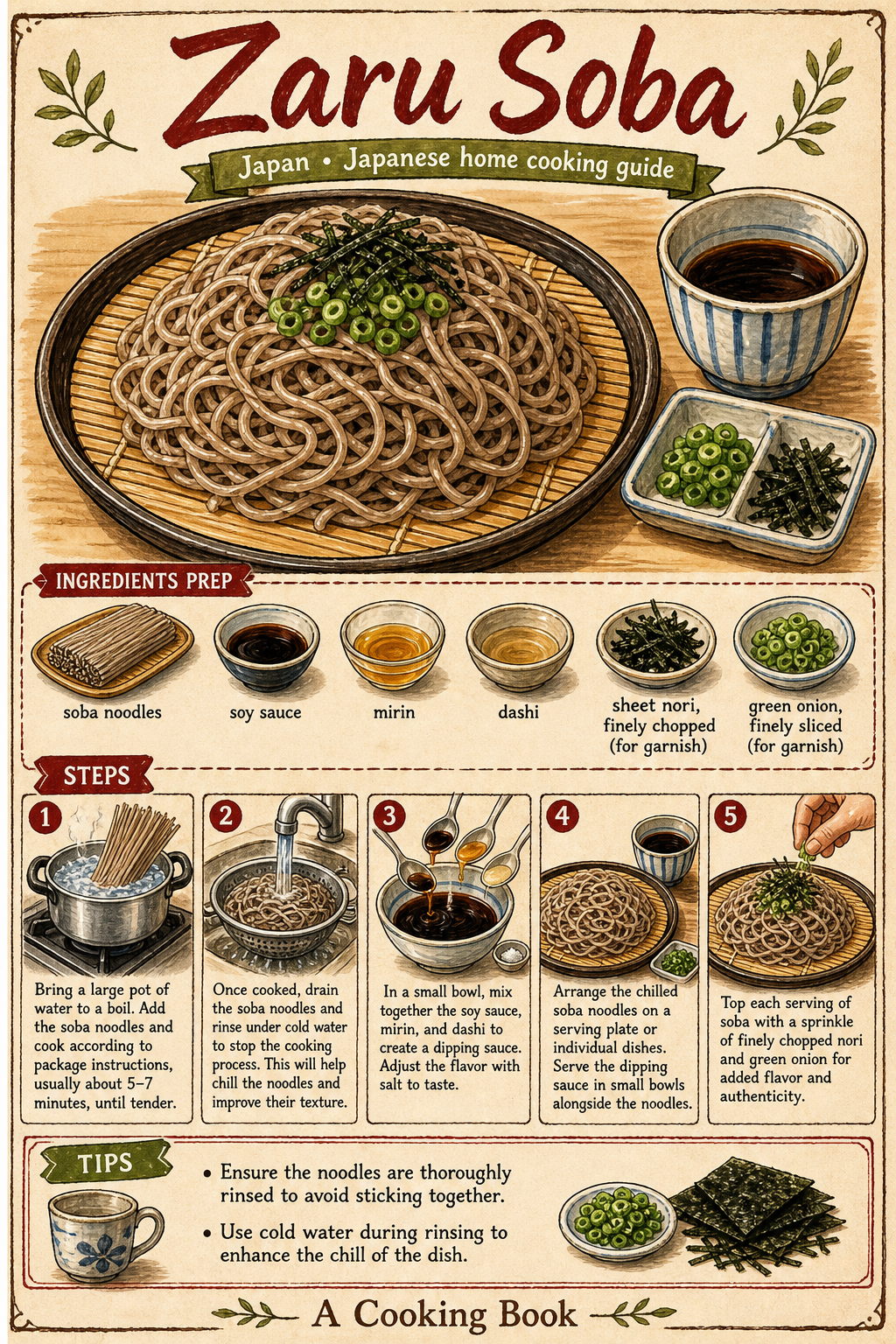
A polished English infographic for the whole cooking flow, paired with the full written recipe below for detail and SEO.
Written method
Instructions
Read through once, then cook at your own pace with the illustrated guide above.
- 1
Bring a large pot of water to a boil. Add the soba noodles and cook according to package instructions, usually about 5-7 minutes, until tender.
- 2
Once cooked, drain the soba noodles and rinse under cold water to stop the cooking process. This will help chill the noodles and improve their texture.
- 3
In a small bowl, mix together the soy sauce, mirin, and dashi to create a dipping sauce. Adjust the flavor with salt to taste.
- 4
Arrange the chilled soba noodles on a serving plate or individual dishes. Serve the dipping sauce in small bowls alongside the noodles.
- 5
Top each serving of soba with a sprinkle of finely chopped nori and green onion for added flavor and authenticity.
Cook notes
Tips
Ensure the noodles are thoroughly rinsed to avoid sticking together.
Use cold water during rinsing to enhance the chill of the dish.
Cook smarter
Helpful notes
Practical storage, serving, swap, and troubleshooting notes for a better first try.
Storage Tips
- Refrigerate any leftover soba noodles in an airtight container for up to 2 days.
- The dipping sauce can be stored in the refrigerator for up to a week.
Substitutions
- For dashi, use vegetable broth for a vegetarian option.
- Mirin can be replaced with a mix of white wine and sugar if not available.
What to Serve With
- Steamed edamame for a nutritious side.
- Pickled vegetables for added crunch and flavor.
- A light salad with sesame dressing.
Common Mistakes
- Overcooking the soba noodles will make them mushy.
- Not rinsing the noodles will result in a sticky texture.
Recipe FAQ
Can I use whole wheat noodles instead of soba?
While soba noodles have a unique flavor, whole wheat noodles can be used in a pinch, though they will alter the taste.
How do I store leftover soba noodles?
Store leftover soba noodles in an airtight container in the refrigerator for up to 2 days.
Can I make the dipping sauce ahead of time?
Yes, the dipping sauce can be prepared a day in advance and stored in the refrigerator.
Kitchen tools
Helpful Tools for This Recipe
A light, editable placeholder for future partner recommendations. No real affiliate links are enabled yet.
Rice cooker
Good for steady rice, grains, and meal-prep bowls.
Blender
Helpful for smooth sauces, soups, marinades, and purees.
Chef knife
A basic prep tool for vegetables, herbs, aromatics, and proteins.
Cutting board
Keeps prep organized for chopping, slicing, and staging ingredients.
Measuring spoons
Useful for balancing spices, salt, acids, and sauces.
Some links may be affiliate links. As an Amazon Associate or partner, we may earn from qualifying purchases when enabled. Read the Affiliate Disclosure.
Cook along weekly
Want more illustrated recipes like Zaru Soba?
Join the World Recipe Letter for global home-cooking ideas and visual recipe guides.
Join the World Recipe Letter
Get 5 illustrated recipes every week.
No account needed. Unsubscribe when email delivery is connected.
Cook next
You might also like
More flavors from the same country or nearby pantry style.
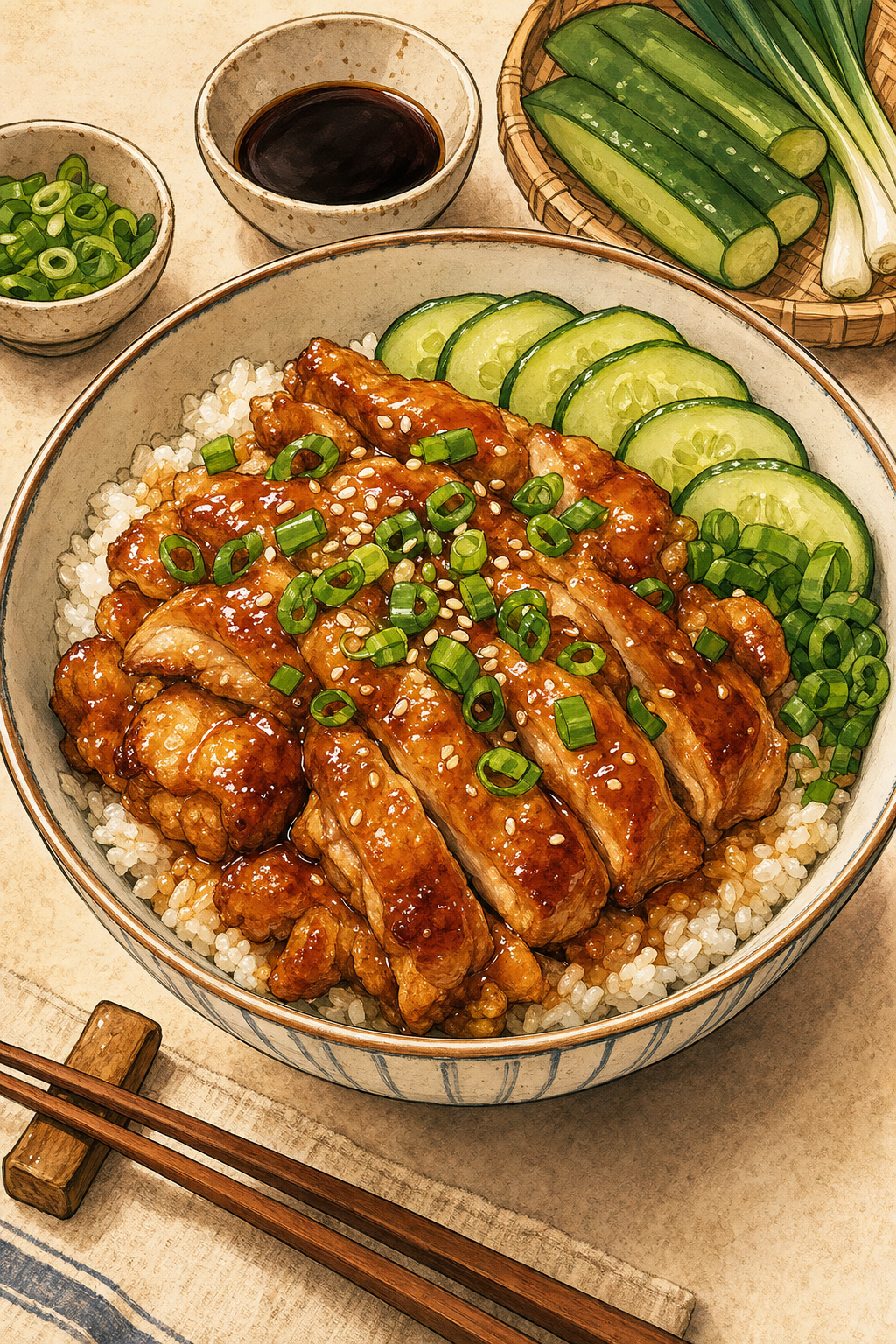
Chicken Teriyaki Donburi
A glossy chicken rice bowl with quick teriyaki sauce, cucumber, scallions, and sesame.
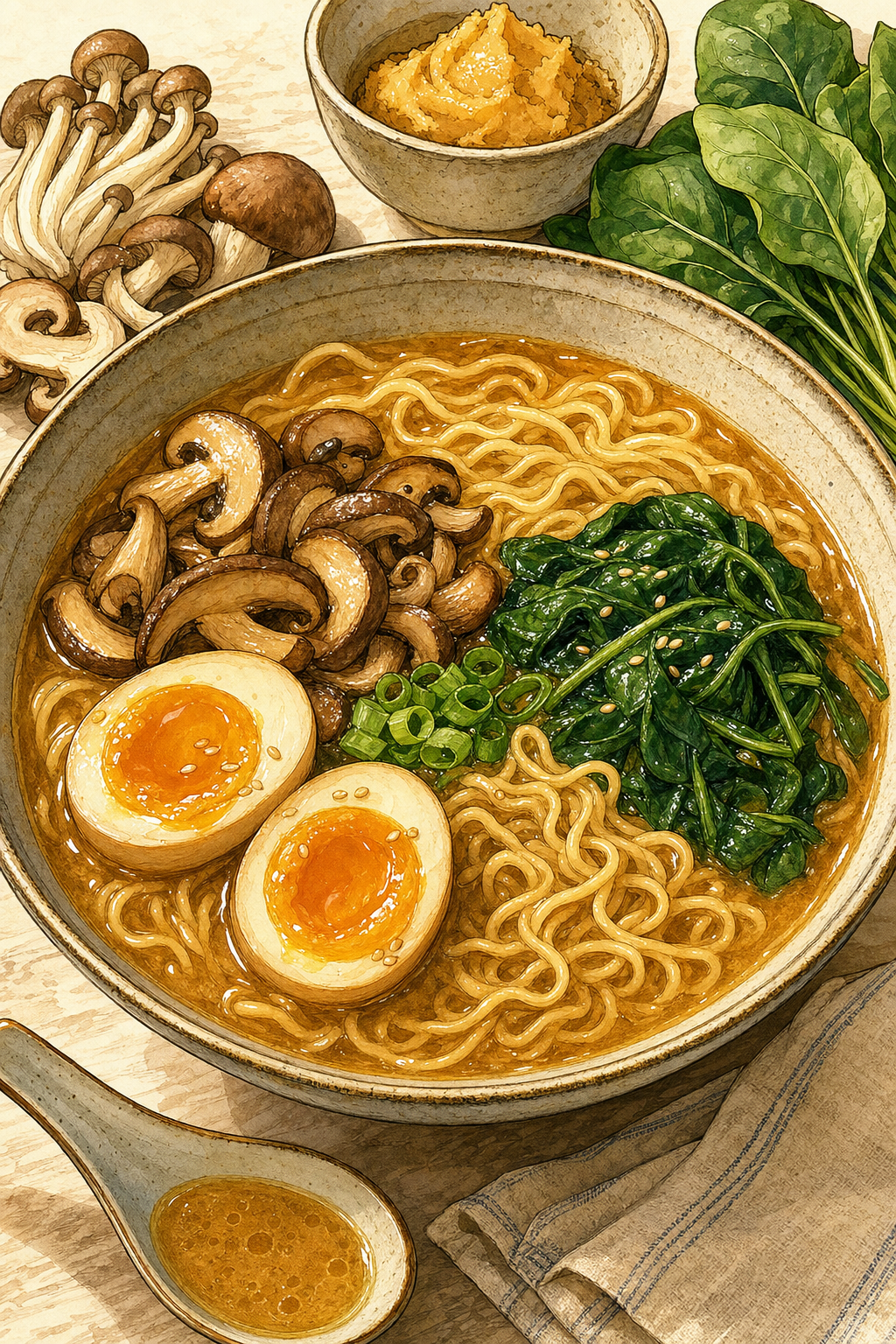
Vegetable Miso Ramen
A cozy vegetarian ramen with miso broth, noodles, greens, mushrooms, and jammy eggs.
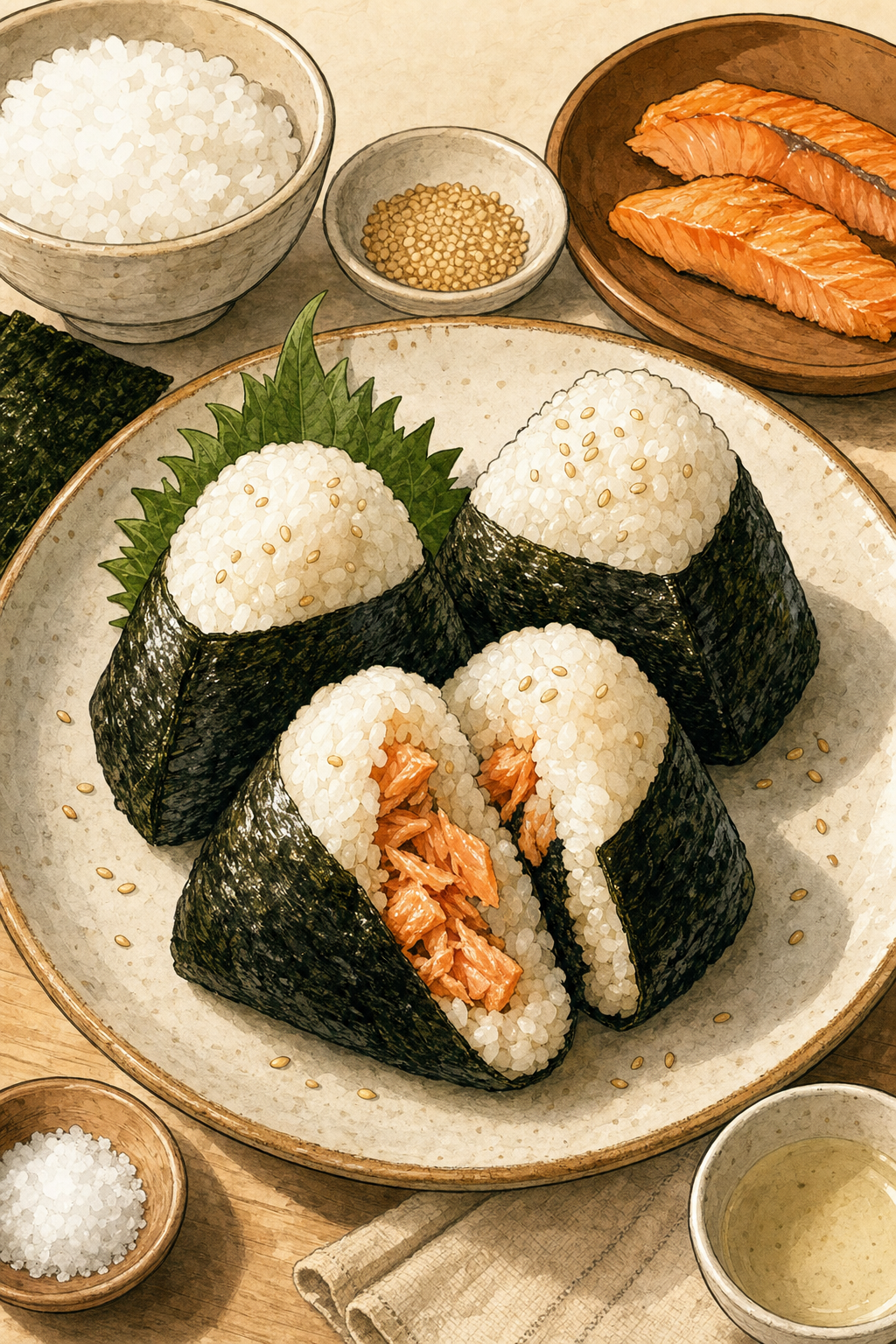
Salmon Onigiri
Hand-shaped rice balls filled with flaky salmon and wrapped in crisp nori.