Traditional Pão Alentejano
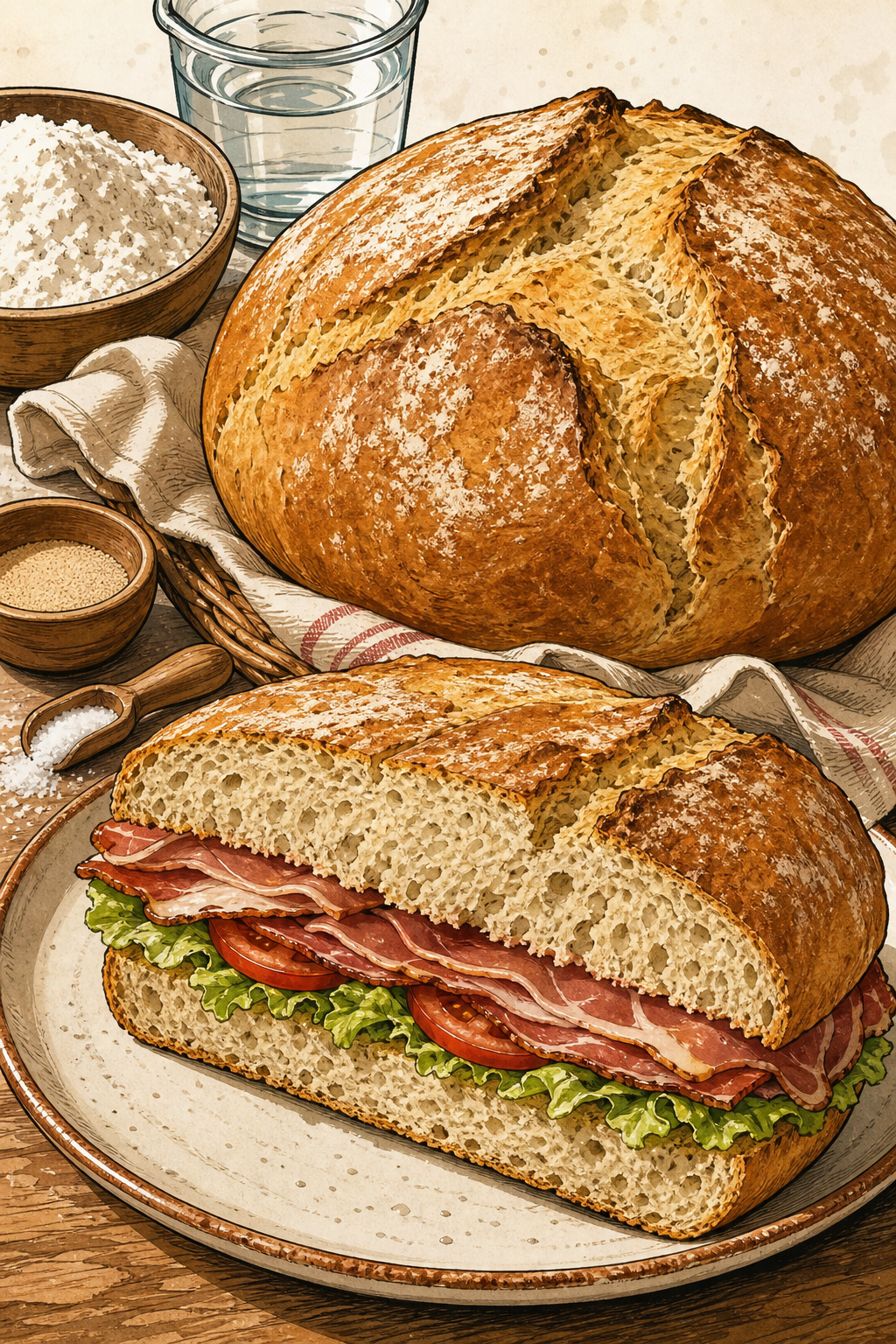
Pão Alentejano is a naturally flavored, unsweetened country loaf with a long fermentation, substantial crumb, and deeply baked crust, traditionally shaped with its characteristic head.
Plan and shop
Save this recipe for real-life cooking
Build a local shopping list or place this recipe into a weekly meal plan. No account is required.
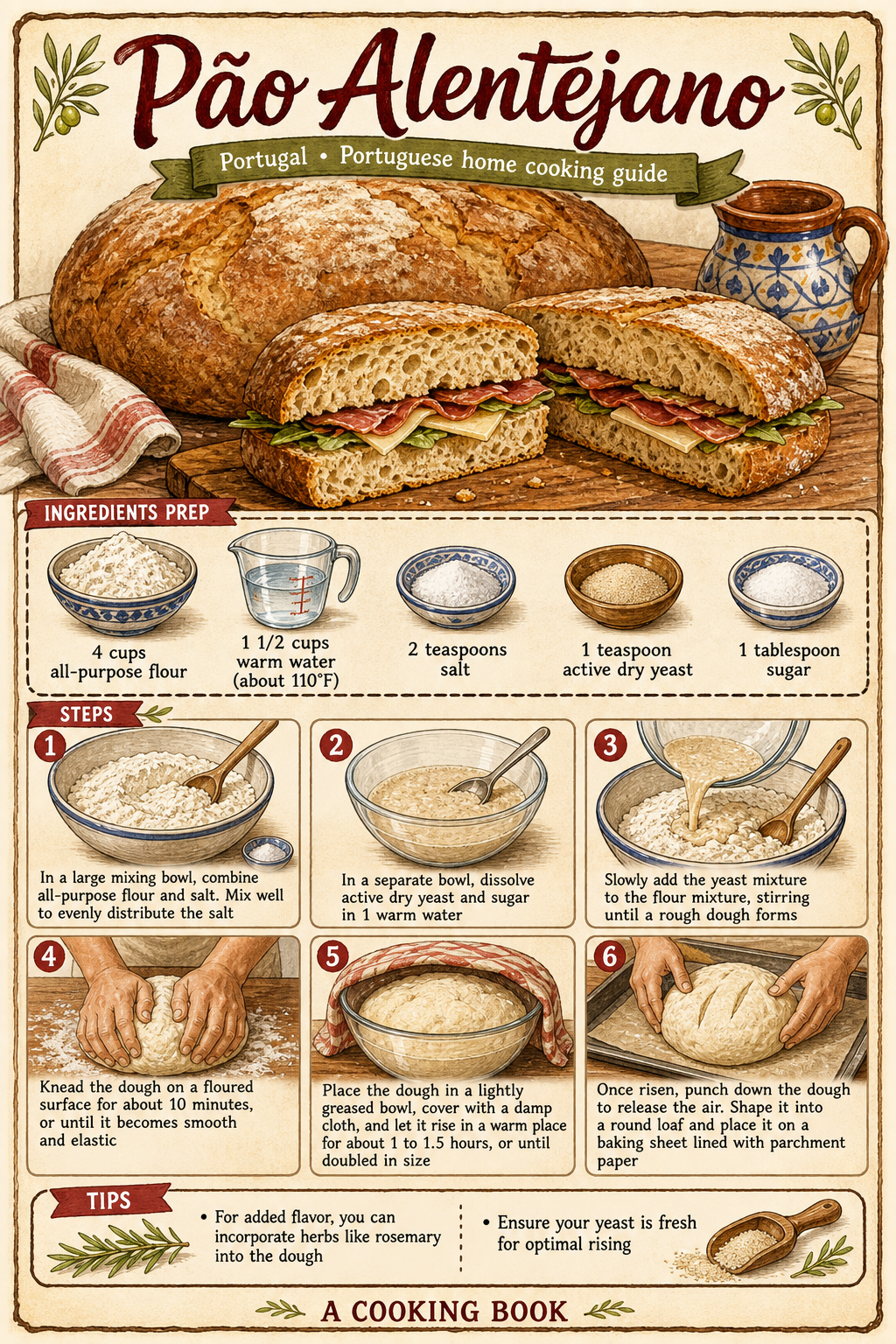
Illustrated cooking guide
Step-by-step visual method
A polished English infographic for the whole cooking flow, paired with the full written recipe below for detail and SEO.
Written method
Instructions
Read through once, then cook at your own pace with the illustrated guide above.
- 1
Mix the flour and most of the water and rest for 30 minutes.
- 2
Add the starter and salt, kneading in the remaining water until the dough is elastic.
- 3
Cover and ferment slowly until visibly aerated, folding the dough twice during the first 2 hours.
- 4
Shape a tight oval, pinch and fold one end over to form the traditional cabeça, and place seam-side down on a floured cloth.
- 5
Proof until expanded but still springy while the oven and baking stone heat to 240°C.
- 6
Bake with steam, reducing to 220°C after 15 minutes, until deeply browned and hollow-sounding; cool completely before slicing.
Cook notes
Tips
For added flavor, you can incorporate herbs like rosemary into the dough.
Ensure your yeast is fresh for optimal rising.
Let the bread cool completely before storing to maintain its texture.
Cook smarter
Helpful notes
Practical storage, serving, swap, and troubleshooting notes for a better first try.
Storage Tips
- Store the bread in a cool, dry place away from direct sunlight.
- For longer freshness, wrap the bread in foil and freeze it.
Substitutions
- Use the closest Portuguese ingredient named in the recipe; substitutions can change the traditional character.
What to Serve With
- Serve in the Portuguese manner described in the recipe, with simple bread, salad, potatoes, rice, or wine as appropriate.
Common Mistakes
- Adding sugar to speed fermentation.
- Underbaking the loaf and losing its sturdy crust.
Recipe FAQ
What makes Traditional Pão Alentejano traditional?
Pão Alentejano is a naturally flavored, unsweetened country loaf with a long fermentation, substantial crumb, and deeply baked crust, traditionally shaped with its characteristic head.
Can I prepare Traditional Pão Alentejano ahead?
Prepare components ahead where practical, but follow the serving and texture guidance in the final steps for the best result.
Kitchen tools
Helpful Tools for This Recipe
A light, editable placeholder for future partner recommendations. No real affiliate links are enabled yet.
Baking sheet
Useful for roasting, baking, broiling, and sheet-pan prep.
Chef knife
A basic prep tool for vegetables, herbs, aromatics, and proteins.
Cutting board
Keeps prep organized for chopping, slicing, and staging ingredients.
Measuring spoons
Useful for balancing spices, salt, acids, and sauces.
Some links may be affiliate links. As an Amazon Associate or partner, we may earn from qualifying purchases when enabled. Read the Affiliate Disclosure.
Cook along weekly
Want more illustrated recipes like Traditional Pão Alentejano?
Join the World Recipe Letter for global home-cooking ideas and visual recipe guides.
Join the World Recipe Letter
Get 5 illustrated recipes every week.
No account needed. Unsubscribe when email delivery is connected.
Cook next
You might also like
More flavors from the same country or nearby pantry style.
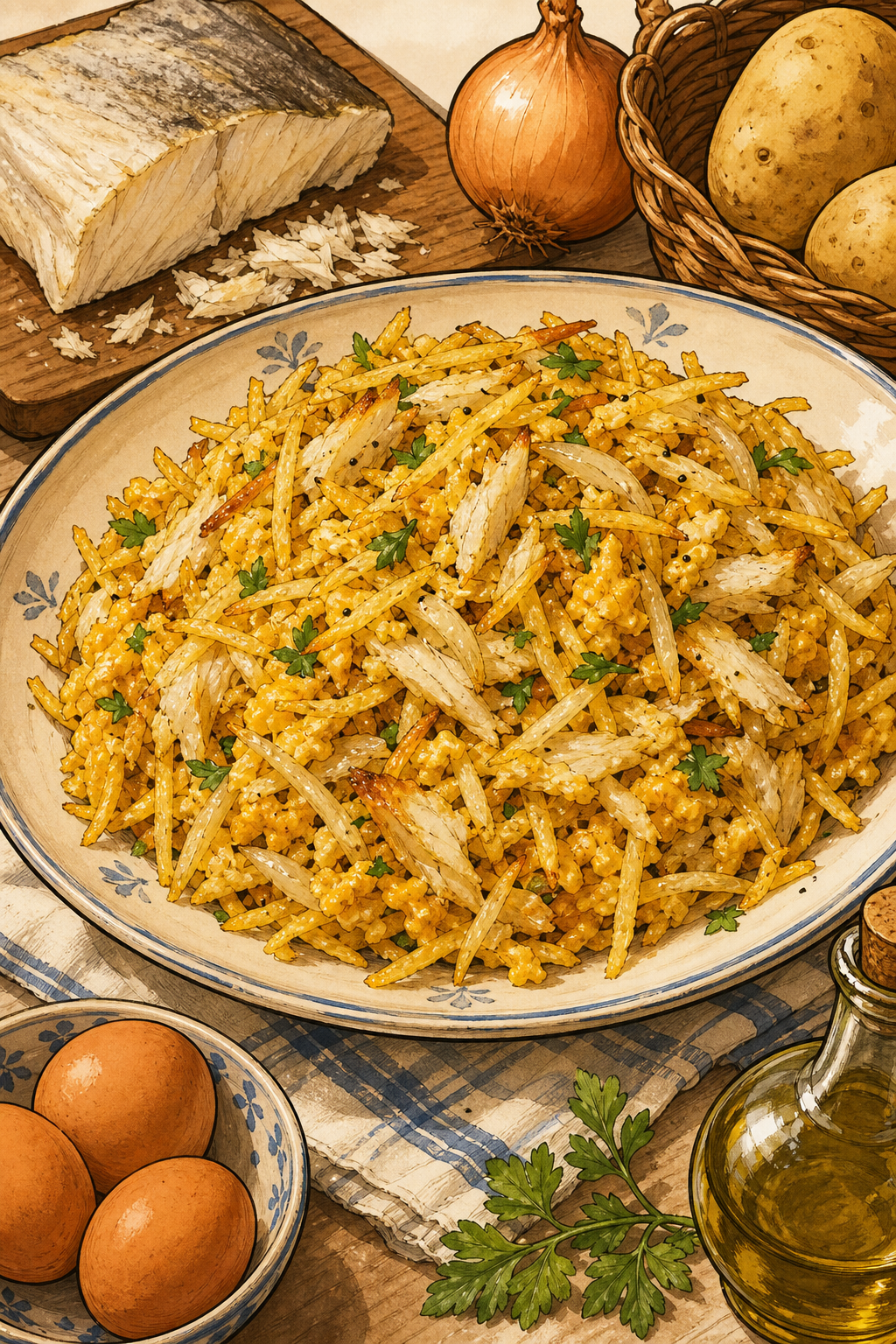
Traditional Bacalhau à Brás
Bacalhau à Brás is a Lisbon classic of desalted salt cod, slowly softened onion, crisp matchstick potatoes, and softly set eggs, finished with parsley and black olives.
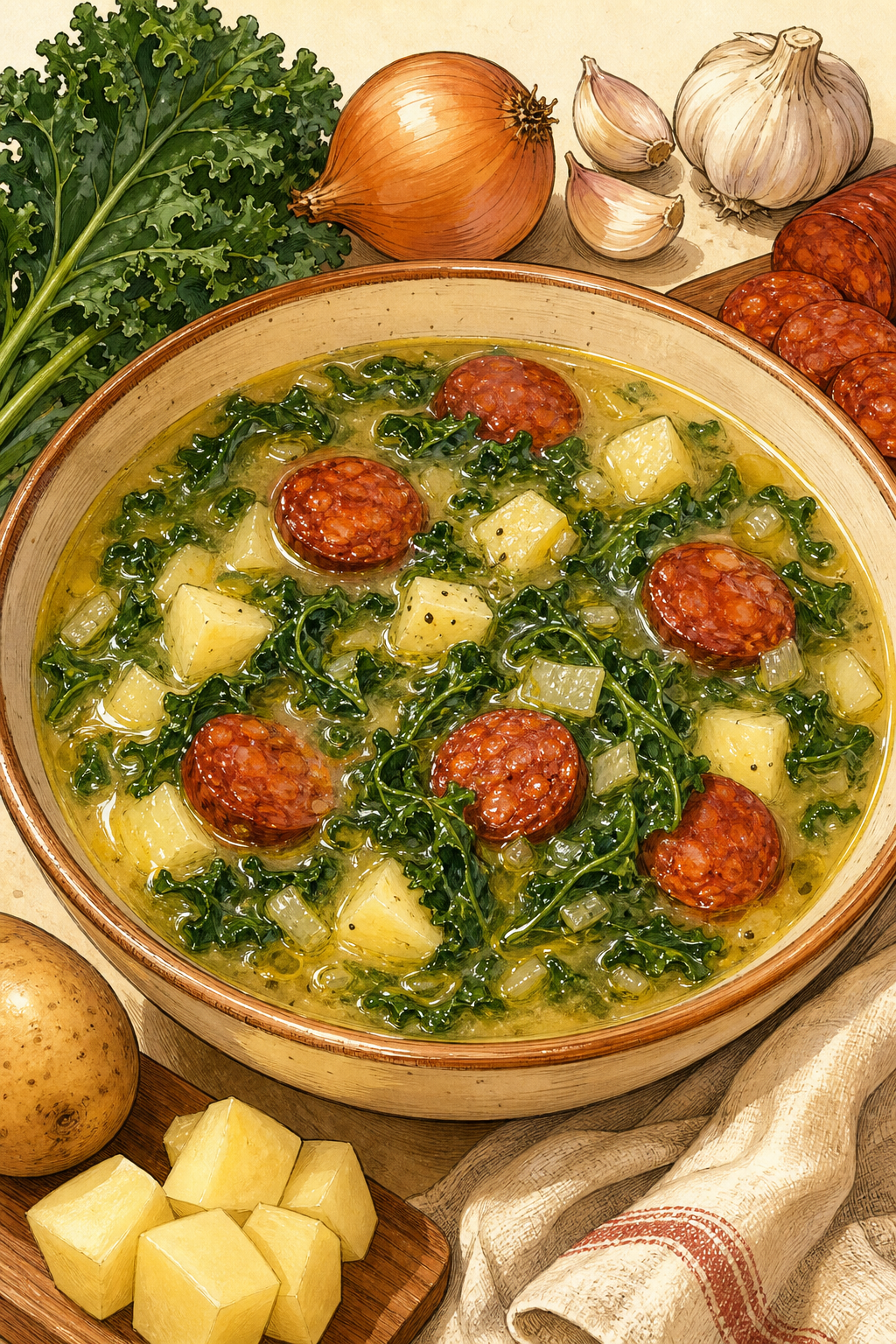
Traditional Portuguese Caldo Verde
Traditional caldo verde pairs a smooth potato-and-onion broth with hair-thin ribbons of couve-galega, olive oil, and a few slices of Portuguese chouriço.
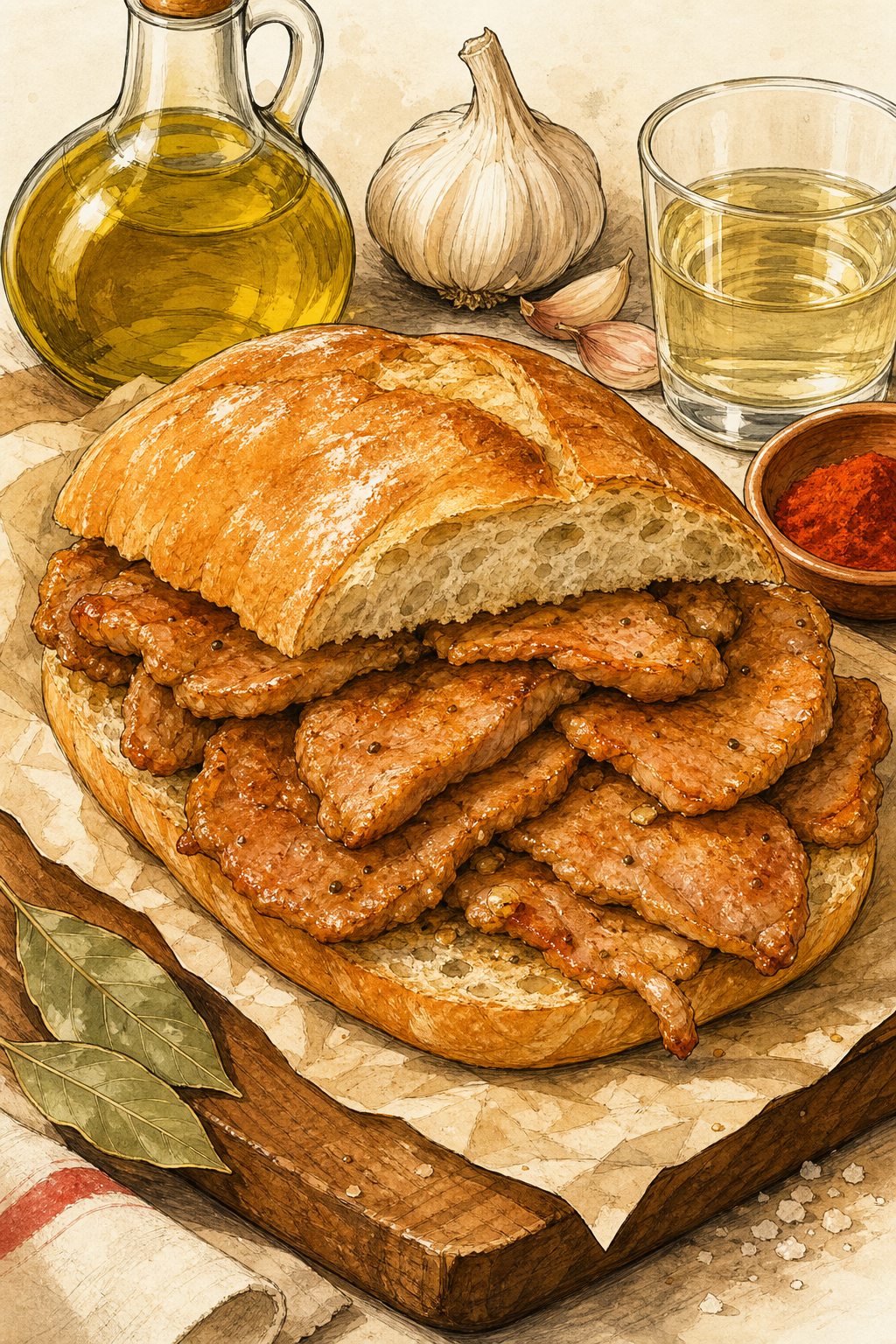
Traditional Portuguese Bifana
A bifana is a Portuguese pork sandwich: very thin pork steaks simmered in a garlicky white-wine and bay-leaf sauce, tucked into a crusty papo-seco roll.