Traditional Romanian Ardei Umpluți: Meat-Stuffed Peppers in Tomato Sauce
Romanian ardei umpluți are pale sweet peppers loosely filled with a pork-and-beef mixture containing only sparse embedded rice, then gently simmered on the stovetop in a completely smooth, lightly sweet tomato-passata sauce. At an open pepper, the filling must read visually as at least 85-90% minced meat with only occasional rice grains; the sauce contains no loose rice, tomato pieces or vegetable chunks.
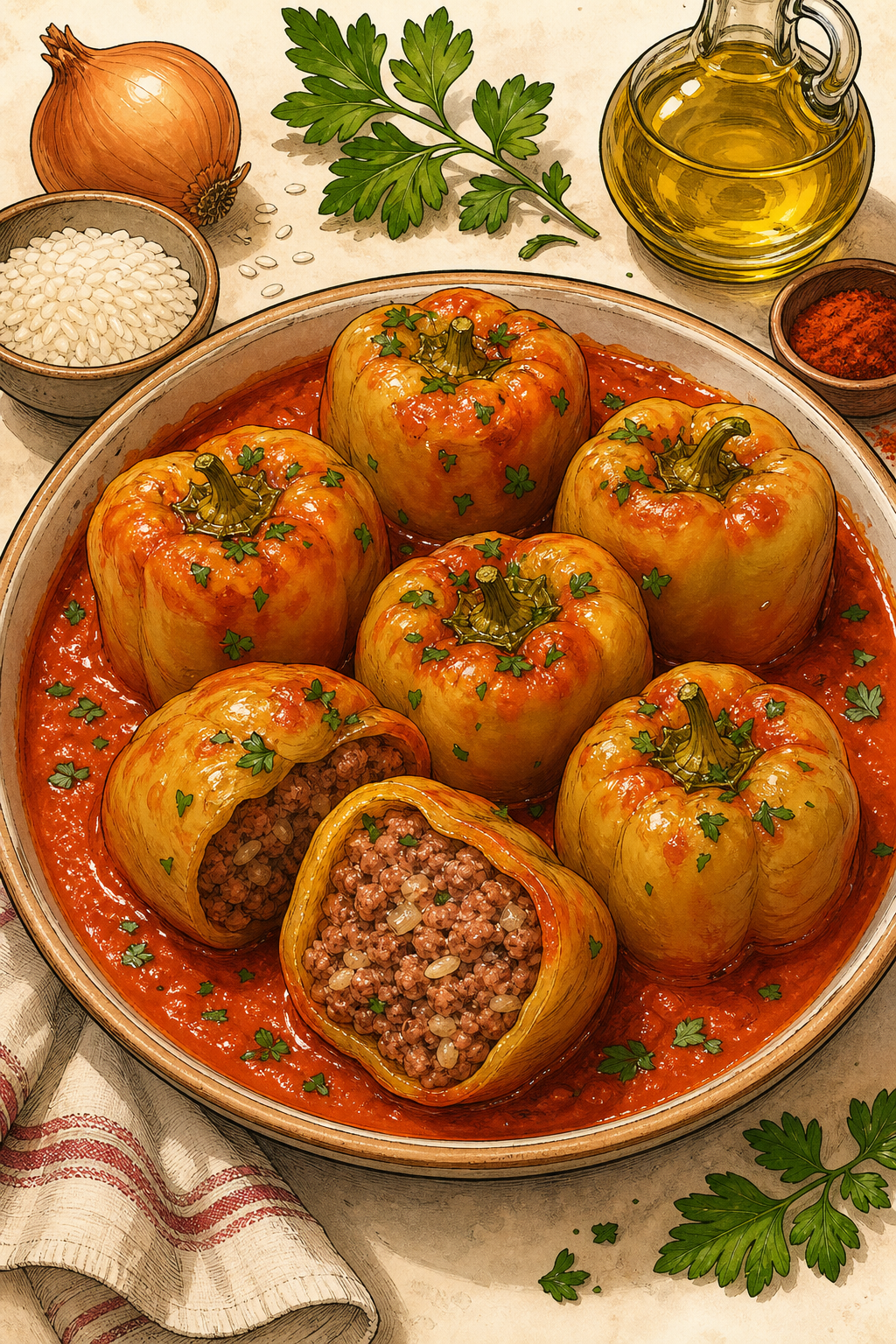
Plan and shop
Save this recipe for real-life cooking
Build a local shopping list or place this recipe into a weekly meal plan. No account is required.
Illustrated cooking guide
Step-by-step visual method
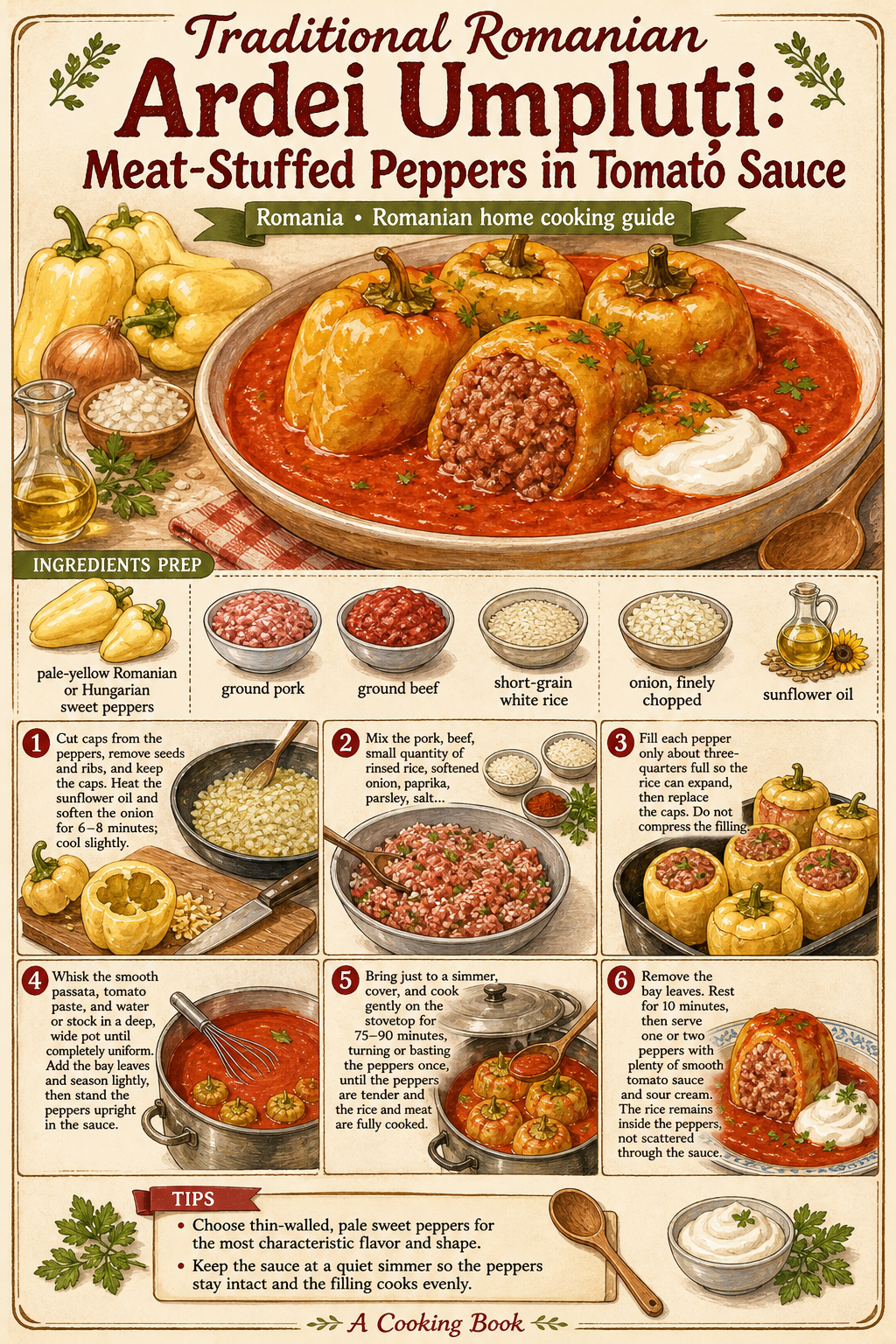
A polished English infographic for the whole cooking flow, paired with the full written recipe below for detail and SEO.
Written method
Instructions
Read through once, then cook at your own pace with the illustrated guide above.
- 1
Cut caps from the peppers, remove seeds and ribs, and keep the caps. Heat the sunflower oil and soften the onion for 6-8 minutes; cool slightly.
- 2
Mix the pork, beef, small quantity of rinsed rice, softened onion, paprika, parsley, salt, and pepper just until combined. The filling and any visible cut surface must read as at least 85-90% minced meat, with only occasional rice grains embedded inside rather than a rice-forward or equal meat-and-rice mixture.
- 3
Fill each pepper only about three-quarters full so the rice can expand, then replace the caps. Do not compress the filling.
- 4
Whisk the smooth passata, tomato paste, and water or stock in a deep, wide pot until completely uniform. Add the bay leaves and season lightly, then stand the peppers upright in the sauce; do not add diced tomatoes, vegetables or loose rice to the sauce.
- 5
Bring just to a simmer, cover, and cook gently on the stovetop for 75-90 minutes, turning or basting the peppers once, until the peppers are tender and the rice and meat are fully cooked.
- 6
Remove the bay leaves. Rest for 10 minutes, then serve one or two peppers with plenty of smooth tomato sauce and sour cream. The rice should remain inside the peppers, not scattered through the sauce.
Cook notes
Tips
Choose thin-walled, pale sweet peppers for the most characteristic flavor and shape.
Keep the sauce at a quiet simmer so the peppers stay intact and the filling cooks evenly.
Cook smarter
Helpful notes
Practical storage, serving, swap, and troubleshooting notes for a better first try.
Storage Tips
- Store leftovers in an airtight container in the refrigerator for up to 3 days.
- For longer storage, freeze the stuffed peppers individually wrapped in plastic wrap and then placed in a freezer bag.
- To reheat, thaw overnight in the fridge and warm in the oven until heated through.
Substitutions
- Use another thin-walled pale sweet pepper if Romanian peppers are unavailable; thick green peppers taste more bitter.
- All-pork filling works, though the traditional pork-and-beef mixture is especially balanced.
- Use strained crushed tomatoes in place of passata so the sauce remains smooth.
What to Serve With
- Sour cream spooned over each serving.
- Fresh bread for the tomato sauce.
Common Mistakes
- Packing the filling tightly or filling to the rim leaves no room for the rice to expand.
- Using one cup of raw rice overwhelms the meat and can split the peppers.
- Boiling hard or switching between stovetop and oven can break the peppers and muddy the smooth sauce.
Recipe FAQ
Can I use a different type of meat for the filling?
A pork-and-beef mixture is characteristic and stays juicy; all-pork is a closer alternative than poultry.
How long can I store leftovers?
Leftover stuffed peppers can be stored in the refrigerator for up to 3 days in an airtight container.
Can I freeze the stuffed peppers?
Yes, these stuffed peppers freeze well. Just make sure they are completely cooled before freezing.
Kitchen tools
Helpful Tools for This Recipe
A light, editable placeholder for future partner recommendations. No real affiliate links are enabled yet.
Rice cooker
Good for steady rice, grains, and meal-prep bowls.
Blender
Helpful for smooth sauces, soups, marinades, and purees.
Saucepan
Useful for simmering sauces, soups, grains, and small-batch stews.
Chef knife
A basic prep tool for vegetables, herbs, aromatics, and proteins.
Cutting board
Keeps prep organized for chopping, slicing, and staging ingredients.
Some links may be affiliate links. As an Amazon Associate or partner, we may earn from qualifying purchases when enabled. Read the Affiliate Disclosure.
Cook along weekly
Want more illustrated recipes like Traditional Romanian Ardei Umpluți: Meat-Stuffed Peppers in Tomato Sauce?
Join the World Recipe Letter for global home-cooking ideas and visual recipe guides.
Join the World Recipe Letter
Get 5 illustrated recipes every week.
No account needed. Unsubscribe when email delivery is connected.
Cook next
You might also like
More flavors from the same country or nearby pantry style.
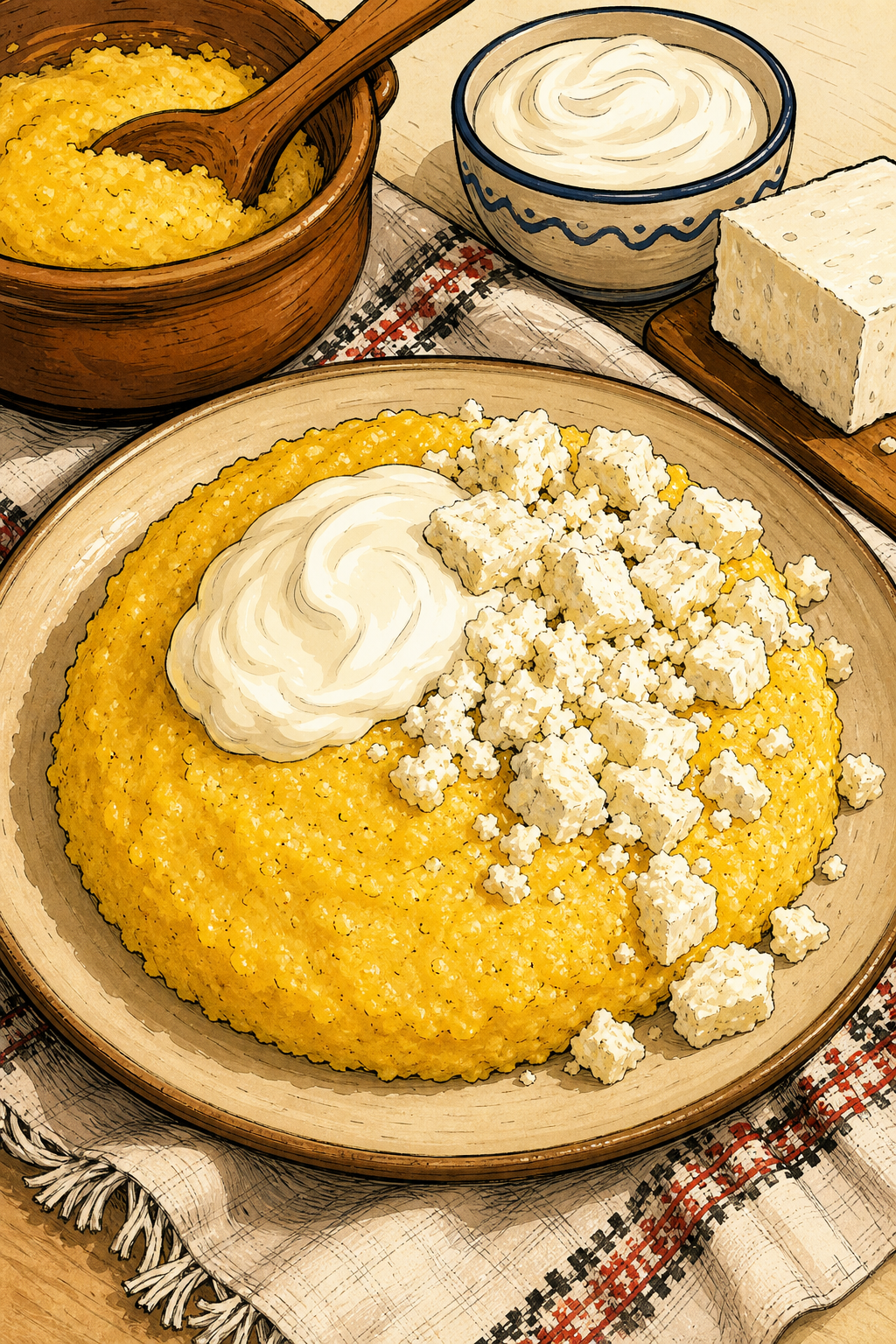
Traditional Romanian Mămăligă cu Brânză și Smântână: Cornmeal with Brined Cheese and Sour Cream
Mămăligă cu brânză și smântână pairs firm, slowly cooked Romanian cornmeal with salty Telemea and cool sour cream. The cheese and cream are served on or beside the hot mămăligă rather than cooked into it.
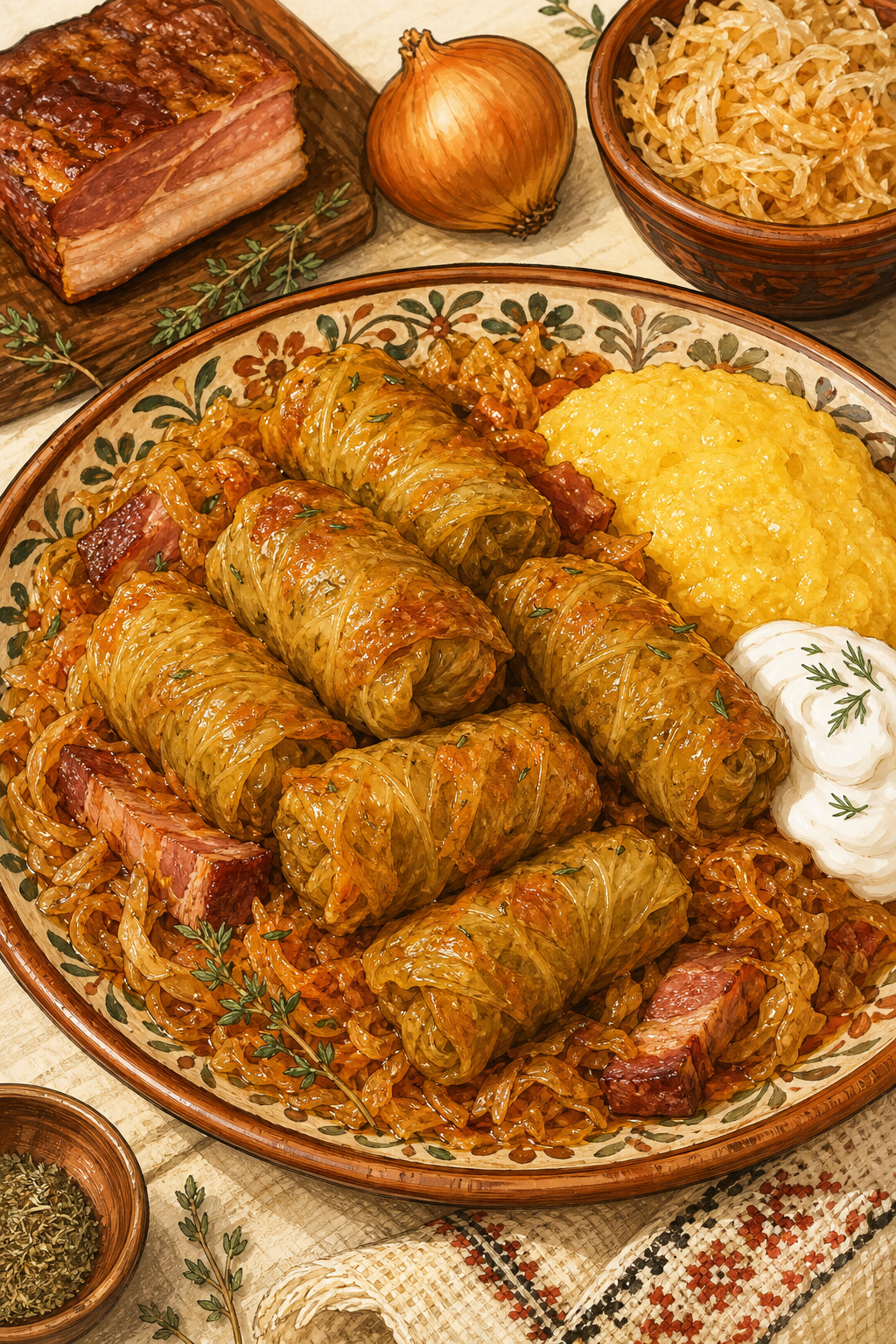
Traditional Romanian Sarmale: Pork-and-Rice Rolls in Sour Cabbage Leaves
Romanian sarmale are small pork-and-rice rolls wrapped in sour cabbage leaves and slowly simmered over shredded cabbage with a little smoked pork, thyme and tomato. They are traditionally served with mămăligă and sour cream.
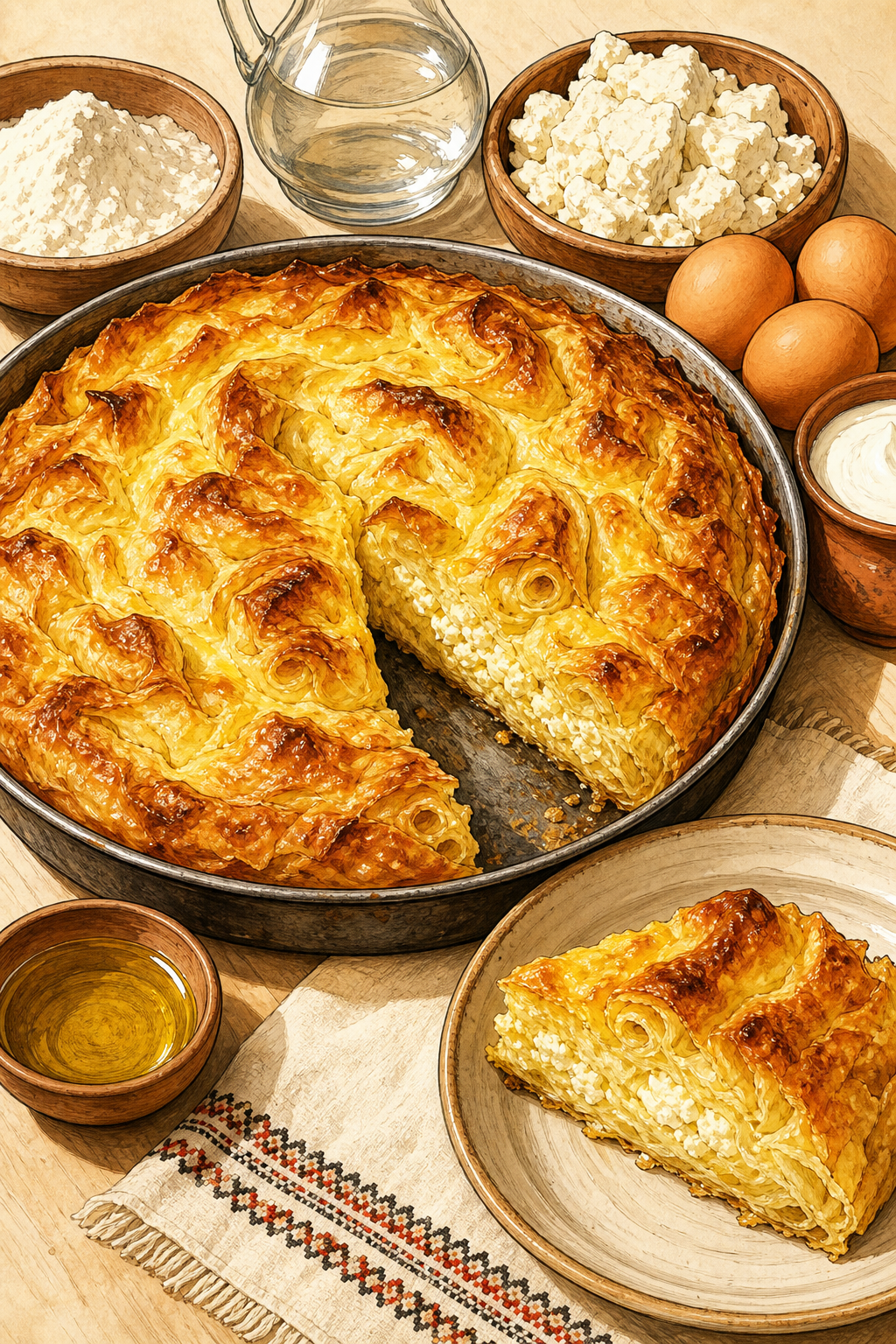
Plăcintă Dobrogeană PGI: Layered Brined-Cheese Pie with Yogurt and Eggs
Plăcintă dobrogeană PGI is made from very thin hand-stretched dough filled with salted soft cheese, gathered into ruffled rolls or coils in a tray, and baked beneath a yogurt-and-egg finish. It is not a flat stack of alternating pastry sheets.